
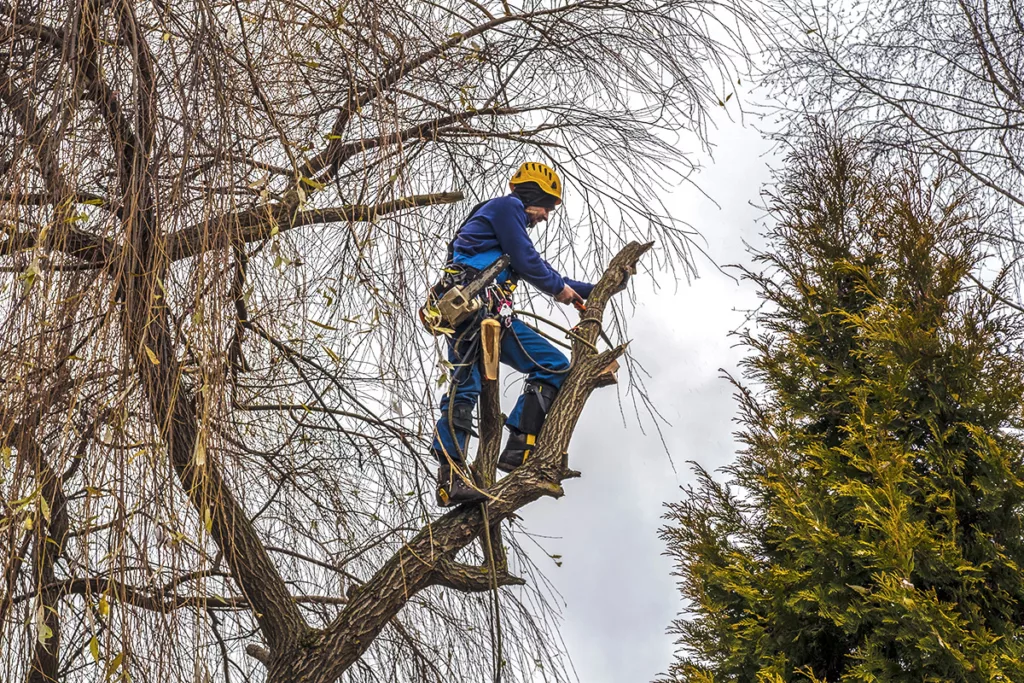
Fall tree care is the most valuable seasonal work you can do for your Connecticut trees — the steps you take in October and November decide how well your trees survive winter storms, freezing temperatures, and the long dormant months ahead. Autumn is when trees quietly prepare for winter, and a little help now pays off with healthier, safer, more resilient trees come spring. This guide walks through the six essential steps of preparing your trees before the cold arrives.
Why Fall Tree Care Matters in Connecticut
Connecticut winters are hard on trees. Nor’easters, ice storms, heavy snow, and biting wind test every weakness a tree has, while freezing and thawing soil stresses roots and thin young bark. The trees that come through unscathed are almost always the ones that were prepared in advance. Good fall tree care does two jobs at once: it removes the hazards that winter weather would otherwise turn into emergencies, and it strengthens your trees’ health so they’re ready to thrive when growth resumes. Skipping it is how a small, cheap issue in October becomes a fallen limb — or a lost tree — in January.
1. Prune the Right Trees at the Right Time
Fall is an excellent window to prune certain trees — but not all of them. October and November are ideal for pruning disease-prone species like oaks and elms (whose disease-spreading beetles are dormant in the cold) and for removing dead or hazardous limbs before storms arrive. Spring-flowering trees, though, should be left alone until after they bloom. Getting the timing and technique right protects the tree rather than setting it back, which is why our full guide on fall tree trimming and which trees to prune in October is worth a read before you start, and why professional tree trimming and pruning is the safest route for anything beyond small cuts.
2. Clear Deadwood and Storm Hazards
This is the single most important part of fall tree care for safety. Dead, cracked, diseased, or weakly attached branches are the first to fail under snow load and high wind, and when they come down they take fences, roofs, cars, and power lines with them. Removing them now, before winter, is far cheaper and safer than an emergency call after the damage is done. A professional storm preparation assessment identifies the limbs most likely to fail, and where a whole tree has become a liability, planned hazardous tree removal in the fall beats a crisis in the middle of a storm.
3. Plant New Trees While the Soil Is Warm
Autumn isn’t only about protecting what you have — it’s also one of the best times to plant. October’s cool air and still-warm soil let a new tree focus its energy on root growth, giving it a head start before spring. The key is choosing species suited to fall planting and getting them in the ground about six weeks before the first hard freeze. Our guide to fall tree planting and the best trees to plant in October covers the right choices, and professional tree planting ensures they’re set at the correct depth and location to thrive.
4. Protect Young and Newly Planted Trees
Young trees are the most vulnerable to a Connecticut winter — their shallow roots, thin bark, and tender base need extra help their first few seasons. Mulching to insulate the roots, deep watering until the ground freezes, wrapping trunks against frost cracks and sunscald, and guarding against hungry wildlife all make the difference. Our dedicated guide on how to protect young trees before the first freeze walks through each step, and it pairs with the ongoing care covered in caring for newly planted trees.
5. Mulch and Water Before the Ground Freezes
Two simple tasks benefit trees of every age. A fresh layer of organic mulch over the root zone — kept a few inches clear of the trunk — insulates roots against the freeze-thaw cycle and locks in moisture through winter. And because roots keep growing and drinking until the ground freezes solid, deep watering right up to that point sends your trees into winter properly hydrated, which is especially important for evergreens that lose moisture all season. Together, mulching and late-season watering are the quiet backbone of good fall tree care.
6. Book a Professional Health and Safety Check
Some problems aren’t visible to an untrained eye until they fail. A fall inspection by a professional catches disease, decay, structural weakness, and hazardous limbs while there’s still time to act before winter. A tree health and disease assessment — or a straightforward arborist consultation — turns guesswork into a clear plan, telling you exactly which of your trees need attention now and which are fine to leave. It’s the smartest first step in any fall tree care routine, and it ties into the year-round value of regular tree maintenance.
Your Fall Tree Care Checklist
To pull it together, before winter arrives you’ll want to have pruned the trees that benefit from fall cuts, cleared all deadwood and storm hazards, planted any new trees early enough to root, protected your young trees from cold and wildlife, mulched and deeply watered, and had a professional assess anything you’re unsure about. Work through those six steps and your trees enter winter as prepared as they can be.
Get Your Trees Winter-Ready With Erick’s Tree Service
Fall is a short season, and the window to prepare your trees closes fast once the first freeze hits. Handling it now — properly, and on time — is what keeps your trees safe, healthy, and standing strong through whatever the Connecticut winter brings.
Erick’s Tree Service provides complete fall tree care for residential and commercial properties across Connecticut, from pruning and planting to storm preparation and removals. Contact us or call (203) 514-4967 for a free inspection with no call-out fee, and head into winter with confidence.
Erick’s Tree Service — safe, reliable, professional tree trimming, planting, removal, stump grinding, and emergency storm cleanup for residential and commercial properties in Connecticut.