
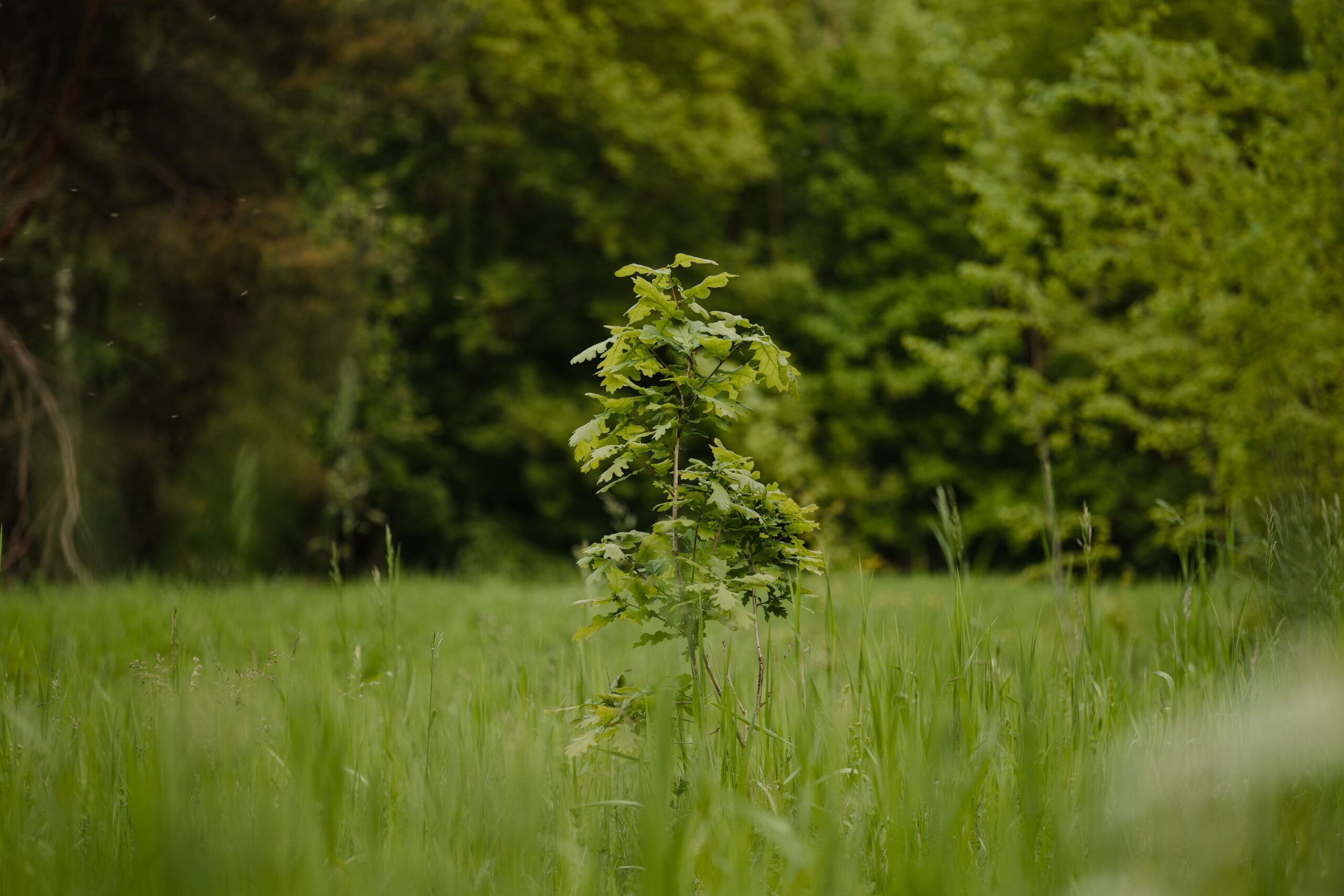
The first two years after planting are the most consequential in any tree’s life. What happens during this establishment period — and what doesn’t — determines whether a young tree builds the root system it needs to become a long-term asset on your Connecticut property, or whether it struggles, declines, and ultimately fails to establish at all. Research consistently shows that around 80% of newly planted trees that receive no care beyond planting do not reach their tenth year. Providing consistent watering and appropriate mulching during the establishment period raises that survival rate to 95% — an enormous change in outcome from a modest investment of time.
Newly planted tree care is not complicated. The stakes are high and the window is specific, but the practices themselves are accessible to any homeowner willing to pay attention to a few key variables. Here is what those variables are, why each one matters in Connecticut’s specific climate, and what to do — and not do — during the critical first two years.
Understanding What “Establishment” Means
A newly planted tree is not simply a tree that has been put in the ground. It is a tree in physiological stress. The act of transplanting — whether from a nursery container, a balled-and-burlapped field-grown specimen, or a bare-root stock — severs a significant portion of the tree’s root system and disrupts its ability to take up water and nutrients. The root ball that arrives in your yard contains a fraction of the root mass the tree had before it was dug.
During the establishment period, the tree is simultaneously trying to maintain the canopy it already has and grow new roots into the surrounding soil. Until those new roots extend beyond the original root ball and into the native soil, the tree is entirely dependent on the moisture and nutrition available within the root ball — which is a very small volume of soil relative to the tree’s above-ground size.
The establishment period for most Connecticut landscape trees runs from one to three years, depending on the species and the caliper of the tree at planting. Larger caliper trees take longer to establish than smaller ones, because the ratio of root ball volume to canopy size is more extreme. A rule of thumb used by arborists is that each inch of trunk caliper at planting requires one year of establishment care — so a two-inch caliper maple planted this spring will need consistent care through the establishment period for approximately two growing seasons before its roots have adequately colonized the surrounding soil.
Watering: The Single Most Important Practice
Watering is the practice that most determines whether a newly planted tree establishes successfully, and it is also the practice most commonly done incorrectly — either too little, too infrequent, or applied in a way that doesn’t reach the root ball where the tree actually needs it.
How much to water: 15 gallons per week is a reliable starting point for trees with trunk calipers around 1.5 inches. Larger trees need proportionally more. During Connecticut’s hot periods — when temperatures stay above 85°F for three or more consecutive days — double the watering frequency. Summer heat drives moisture loss from the root ball faster than roots can replace it, and heat stress during the first growing season is one of the most common causes of new tree decline.
How to water: Slow, deep watering is significantly more beneficial than frequent shallow watering. The goal is to saturate the root ball and the soil immediately surrounding it to a depth of 12 to 18 inches — which is where the active feeder roots are located. A hose set to a slow trickle at the base of the tree for 30 to 45 minutes accomplishes this. A sprinkler system running for 15 minutes does not — lawn irrigation systems are calibrated for turf root depths, which are much shallower than tree root depths. Trees with sprinkler irrigation at the lawn zone are frequently underwatered even when they appear to be getting regular water.
Soaker hoses placed around the drip line and left to run slowly are among the most effective DIY watering tools for newly planted trees. Tree watering bags — gator bags and similar products — release water extremely slowly over a period of hours and are particularly effective for trees on slopes or in locations where slow application is difficult to manage with a hose.
When to check: The soil moisture check is more reliable than any watering schedule. Dig a small hole 2 to 3 inches into the soil near the root ball. If the soil is moist to the touch, hold off on watering. If it is dry, water now regardless of when you last watered. Connecticut’s weather variability — a week of rain followed by two weeks of drought, or unusual early heat in May — means that a fixed watering schedule will inevitably be off during at least some periods. The soil check keeps the watering calibrated to what the tree actually needs.
Year two watering: In the second growing season, reduce watering frequency to every seven to fourteen days during dry spells rather than weekly. The root system has begun colonizing the surrounding soil, and the tree is less dependent on supplemental water than in year one. Continue monitoring for stress signs — wilting during morning hours, premature leaf drop, or brown leaf margins — which indicate the tree needs more water than rainfall is providing.
The Connecticut-specific consideration is fall watering. Trees entering their first or second winter need to go into the cold months with adequate moisture in the root ball. Continue watering through October and into November in dry falls, stopping only when the ground begins to freeze. A root ball that goes into winter dry is more vulnerable to frost damage and desiccation injury than one that is fully hydrated.
Mulching: The Practice That Does the Most Work for the Least Effort
Mulch is the second most important practice in newly planted tree care — and the one with the most persistent common mistake attached to it. Applied correctly, a mulch ring around a young tree conserves soil moisture, moderates soil temperature, suppresses competing weeds and grass, protects the root zone from compaction by foot traffic and lawn equipment, and slowly improves soil structure as it decomposes. Research from the University of Connecticut Extension confirms that proper mulching significantly improves establishment success rates.
The 3-3-3 rule: Apply mulch in a ring starting three inches away from the trunk, three inches deep, extending outward to roughly the drip line of the canopy or as far as the available space allows. The outward extent matters because the roots will grow beyond the drip line as the tree establishes — keeping a mulched zone that expands as the tree grows maximizes the benefit across the establishment period.
The trunk gap is non-negotiable: Do not pile mulch against the trunk. The practice of mounding mulch against tree bases — called mulch volcanoing — is one of the most common and most damaging mistakes in landscape tree care. Mulch that contacts the bark creates a chronically moist, dark environment against tissue that evolved to be exposed to air and light. The result is bark decay, fungal infection at the root flare, the development of girdling roots that circle the trunk rather than radiating outward, and insect infestation. These conditions kill trees — slowly, but reliably. Keep the mulch three to six inches away from the trunk surface, with the root flare visible.
Material choice: Arborist wood chips are the most beneficial mulch material for newly planted trees — the same material discussed in our previous post on wood chip gardening. They hold moisture effectively, decompose into organic matter that improves soil biology, and provide the chunky texture that maintains air spaces rather than compacting into a water-repelling mat. Bark mulch is a second-tier option — functional but less beneficial. Do not use rubber mulch or stone around newly planted trees, as both interfere with the soil biology that the tree’s roots depend on.
Refresh annually: Wood chip mulch decomposes over the course of a growing season. Refresh the layer each spring before the dry summer period — checking depth, pulling any mulch that has worked its way against the trunk, and extending the ring outward if the tree’s canopy has grown.
Staking: Use It Correctly and Remove It on Time
Stakes are appropriate for newly planted trees that have insufficient root ball weight or stability to stand without support — bare-root plantings, trees in exposed or windy locations, and trees with trunk calipers that don’t anchor the root ball firmly against wind rock. They are not appropriate for every newly planted tree, and they are one of the most consistently over-applied and under-removed tree care tools.
When staking is needed, use two to three stakes placed just inside the mulch ring, connected to the trunk with wide, flexible ties — rubber loops, nylon strapping, or commercial tree tie material rather than wire, rope, or anything that bites into the bark. The ties should be loose enough to allow a few inches of trunk movement in each direction. Some trunk movement is necessary for the tree to develop the reaction wood that builds trunk strength. A tree staked so tightly that it cannot move at all develops a dependency on the stake and does not build adequate structural strength.
Remove stakes and ties after one year. A stake left in place through the second growing season creates more problems than it solves — ties that were appropriately loose in year one become constrictive as the trunk expands, and girdling injury from forgotten stakes or ties is a documented source of tree decline and death in residential landscapes.
If a tree still requires staking after one full year in the ground, that instability needs to be assessed by a professional rather than solved by leaving the stakes in place indefinitely. It may indicate a root ball problem, incorrect planting depth, or a species that is not well-matched to the site.
Fertilization: Less Is More During Establishment
The instinct to fertilize a newly planted tree is understandable — the tree is stressed, and nutrition seems like it should help. In practice, fertilizing a newly planted tree during the first growing season often does more harm than good. Nitrogen-heavy fertilizers push rapid above-ground growth at a moment when the tree’s energy should be going into root development. Top growth that outpaces root system capacity increases water stress and reduces establishment success.
Hold off on fertilizing until the tree has completed at least one full growing season in the ground. In year two, a slow-release, low-nitrogen fertilizer applied through deep root injection delivers nutrients directly to the root zone where the tree can use them without stimulating excess top growth. This approach is more beneficial than surface granular application for most newly planted landscape trees.
Our deep root fertilization service is designed specifically for this application — delivering balanced nutrition directly to the root zone at the depth where it reaches feeder roots, without the runoff and surface loss that surface fertilization produces. For trees in their second year of establishment that show signs of nutritional stress — pale or undersized foliage, reduced vigor, slow growth — this is the appropriate intervention.
Pruning: What to Do and What to Leave Alone
Newly planted tree care pruning guidance is simpler than homeowners often expect: do very little in the first year, and only what is structurally necessary in the second.
The first year’s priority is canopy retention. Every leaf is producing the energy the tree needs to establish its root system. Removing healthy foliage during establishment reduces the photosynthetic capacity the tree depends on for root growth. Resist the impulse to shape or thin a new tree during its first growing season — the pruning work can wait until the tree is established.
What does not wait: dead, broken, or diseased branches identified after planting. Remove these promptly — they serve no photosynthetic function and can introduce pathogens or insects into a tree that is already under establishment stress.
In year two, light structural pruning — removing crossing branches, identifying and subordinating competing leaders in young trees, making space for the structure that will define the tree’s form for decades — is appropriate and beneficial when done correctly. This is the work of an ISA-trained arborist who understands the species-specific growth habits of Connecticut landscape trees and can make the cuts that serve the tree’s long-term structure without compromising its establishment momentum.
Our tree trimming and pruning service handles this second-year structural work for homeowners who want the pruning done correctly rather than risking cuts that compromise a tree they have invested in establishing.
Connecticut-Specific Considerations
A few factors specific to Connecticut’s climate and landscape conditions are worth naming explicitly.
Deer browsing is a significant threat to newly planted trees in many Connecticut communities, particularly to young maples, oaks, and dogwoods in suburban and semi-rural settings. A tree tube or wire cage around a newly planted specimen protects it through the first two years when it is most vulnerable — the investment is modest relative to the replacement cost of the tree.
Winter desiccation affects newly planted broadleaf evergreens — rhododendrons, hollies, and similar species — and some young deciduous trees in exposed locations. An anti-desiccant spray applied in late November protects against moisture loss through leaves and bark during Connecticut’s dry, cold winters. This is particularly relevant for trees planted in their first fall that go into winter without a full season of root establishment.
Salt damage from road and sidewalk de-icing is a specific threat to trees planted near streets and driveways. Minimize salt use near newly planted trees and use calcium chloride rather than sodium chloride where possible — sodium is significantly more damaging to soil structure and root function than calcium.
When Something Looks Wrong
The most common signs that a newly planted tree is in stress — and that its establishment care needs adjustment — are wilting or drooping leaves during morning hours or on overcast days (water stress), leaves with brown margins while the center remains green (drought or salt stress), premature fall color or early leaf drop during the growing season (water stress or root damage), and yellowing foliage that doesn’t match the species’ normal season (nutrient deficiency or overwatering).
Any of these signs in a tree that was planted in the last two years warrants a professional assessment before the issue progresses further. Our arborist consultation service evaluates newly planted trees showing stress signs and identifies whether the issue is watering, soil, staking, planting depth, or a pest or disease problem that needs targeted intervention.
For Connecticut homeowners looking to plant new trees — or to replace trees that have failed to establish — our professional tree planting service handles species selection, proper planting technique, and establishment guidance from the first day in the ground. Contact Erick’s Tree Service for a free estimate on any tree planting or care service across Connecticut.
Erick’s Tree Service — safe, reliable, and professional tree care for residential and commercial properties across Connecticut.