
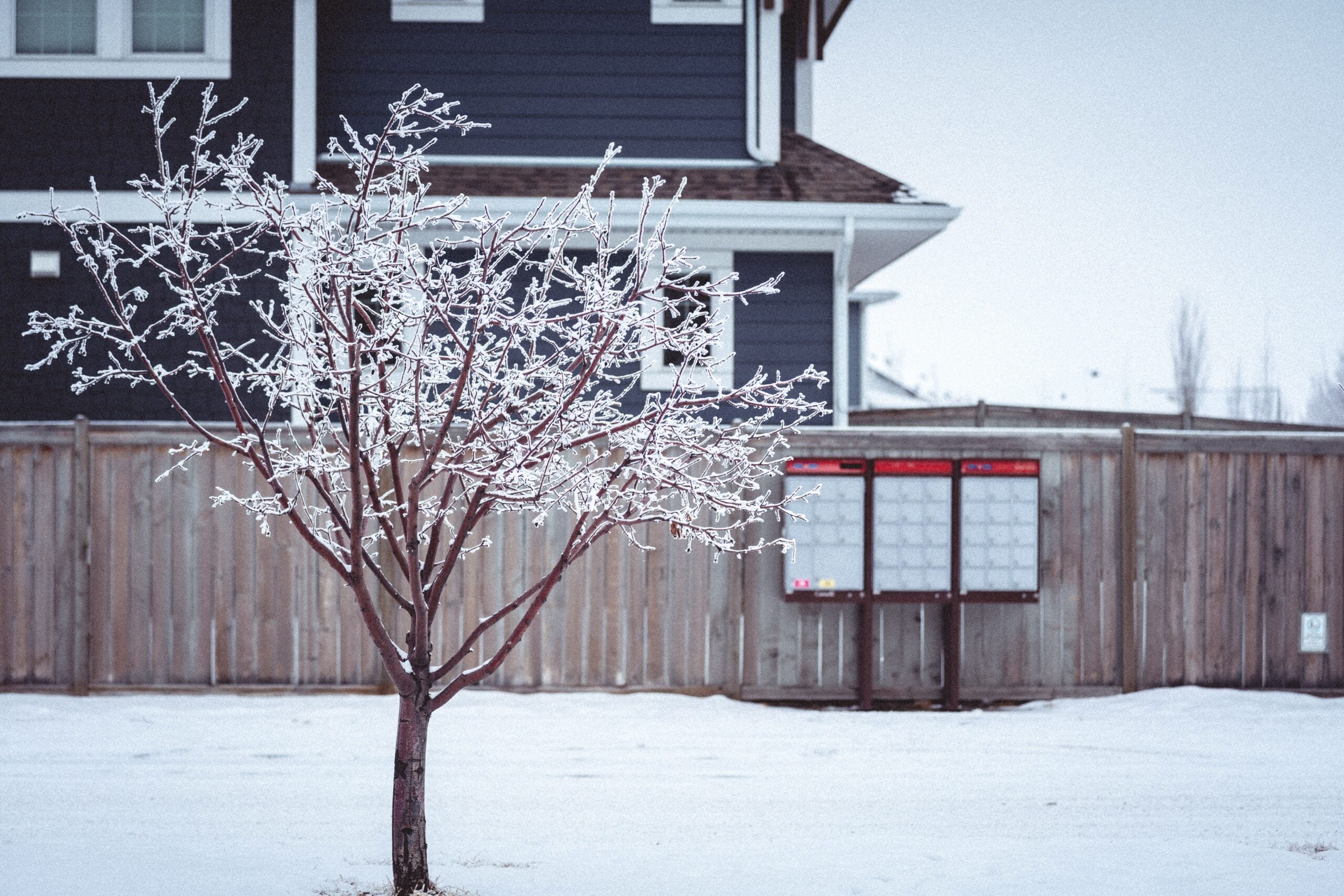
The first winter is the most dangerous one in a young tree’s life — its roots are shallow, its bark is thin, and it hasn’t yet built the resilience that carries mature trees through a Connecticut winter unharmed. A little work to protect young trees now, before the first hard freeze, makes the difference between a tree that sails into spring and one that emerges cracked, dried out, or gnawed by wildlife. Here are seven proven steps to protect young trees before the cold sets in — simple work that pays off all winter.
Why You Need to Protect Young Trees in Their First Winters
For the first two or three years after planting, a tree is still establishing. Its root system is small and close to the surface, where freezing and thawing soil can heave it loose. Its bark is thin and smooth, which makes it prone to frost cracks and sunscald. And its tender base is exactly what hungry mice, voles, and deer look for once other food runs short. Mature trees shrug all of this off; young ones can’t yet. That’s why the effort to protect young trees from the cold is concentrated in these early winters — get them through, and they’re far tougher for good.
1. Mulch to Insulate the Roots
Mulch is your single most valuable tool to protect young trees. A two-to-four-inch layer of organic mulch — wood chips or bark — spread over the root zone insulates the soil, moderates the freeze-thaw cycle that heaves young roots, and holds moisture. Spread it in a wide ring out toward the drip line, but keep it a few inches clear of the trunk itself. Piling mulch against the bark (a “mulch volcano”) traps moisture and invites rot and rodents, undoing the good it does.
2. Water Deeply Until the Ground Freezes
Trees still need water in fall, and a well-hydrated tree withstands cold far better than a dry one. Keep watering deeply right up until the ground freezes, because roots keep growing and drawing moisture even after the leaves drop. This is especially important for evergreens, which lose water through their needles all winter. Going into the freeze properly hydrated is one of the simplest ways to protect young trees from cold-weather damage.
3. Wrap the Trunk Against Frost Cracks and Sunscald
Thin young bark is vulnerable to sunscald and frost cracks — damage caused when winter sun warms the bark by day and it refreezes fast at night, splitting the wood. To protect young trees, wrapping the trunk with a light-colored commercial tree wrap or guard reflects that sun and evens out the temperature swing. Apply it in late fall and, importantly, remove it in spring so it doesn’t trap moisture or girdle the growing trunk.
4. Guard Against Hungry Wildlife
Winter-hungry mice, voles, rabbits, and deer chew bark and can girdle a young tree completely, killing it. A guard around the base — a plastic spiral or a cylinder of hardware cloth pushed slightly into the soil — stops rodents from reaching the bark and is one of the cheapest ways to protect young trees. For deer, taller fencing or repellents help protect the trunk and lower branches. This step is easy to overlook and heartbreaking to skip.
5. Protect Evergreens From Winter Burn
Evergreens keep their foliage all winter, which means they keep losing moisture to cold, drying wind — leading to “winter burn,” the brown, scorched needles you see in spring. Deep watering before the freeze helps, and for small or exposed evergreens, a burlap windbreak screen (not wrapped tight against the foliage) shields them from the harshest wind. Newly planted evergreens are the most at risk and benefit most from the shelter.
6. Hold Off on Late Fertilizing and Heavy Pruning
It’s tempting to feed and tidy before winter, but both can backfire. Fertilizing late pushes tender new growth that won’t harden before frost and simply gets killed back. Heavy pruning does much the same and stresses the tree going into a hard season. Limit yourself to removing clearly dead or broken limbs, and save real feeding and shaping for the right season — a quick arborist consultation will confirm the timing for your specific trees.
7. Stake Only If Necessary — and Check It
A young tree in a very windy, exposed spot may need staking to keep winter winds from rocking it and tearing the roots. But stake loosely, allowing some movement (which actually builds trunk strength), and never leave ties so tight they cut into the bark. If your tree was already staked at planting, check that the ties haven’t become constricting as the trunk has grown.
The Foundation: Healthy Trees Handle Winter Better
Every step above works best on a tree that went into fall healthy and well-established. That’s why proper tree planting and consistent care through the growing season matter so much — a strong, well-rooted young tree needs less winter babying than a struggling one. For the full picture on the crucial establishment period, our guide on caring for newly planted trees walks through the first two years in detail.
Get Your Young Trees Winter-Ready With Erick’s Tree Service
A few hours of preparation before the first freeze can save a young tree you’d otherwise lose — and losing an establishing tree means starting the clock over. If you’re unsure how to prepare the trees on your property, or want an expert to handle it, we’re here to help.
Erick’s Tree Service cares for trees of every age across Connecticut, from planting and winter preparation to pruning and removal. Contact us or call (203) 514-4967 for a free inspection with no call-out fee, and head into winter with confidence.
Erick’s Tree Service — safe, reliable, professional tree planting, trimming, removal, stump grinding, and emergency storm cleanup for residential and commercial properties in Connecticut.