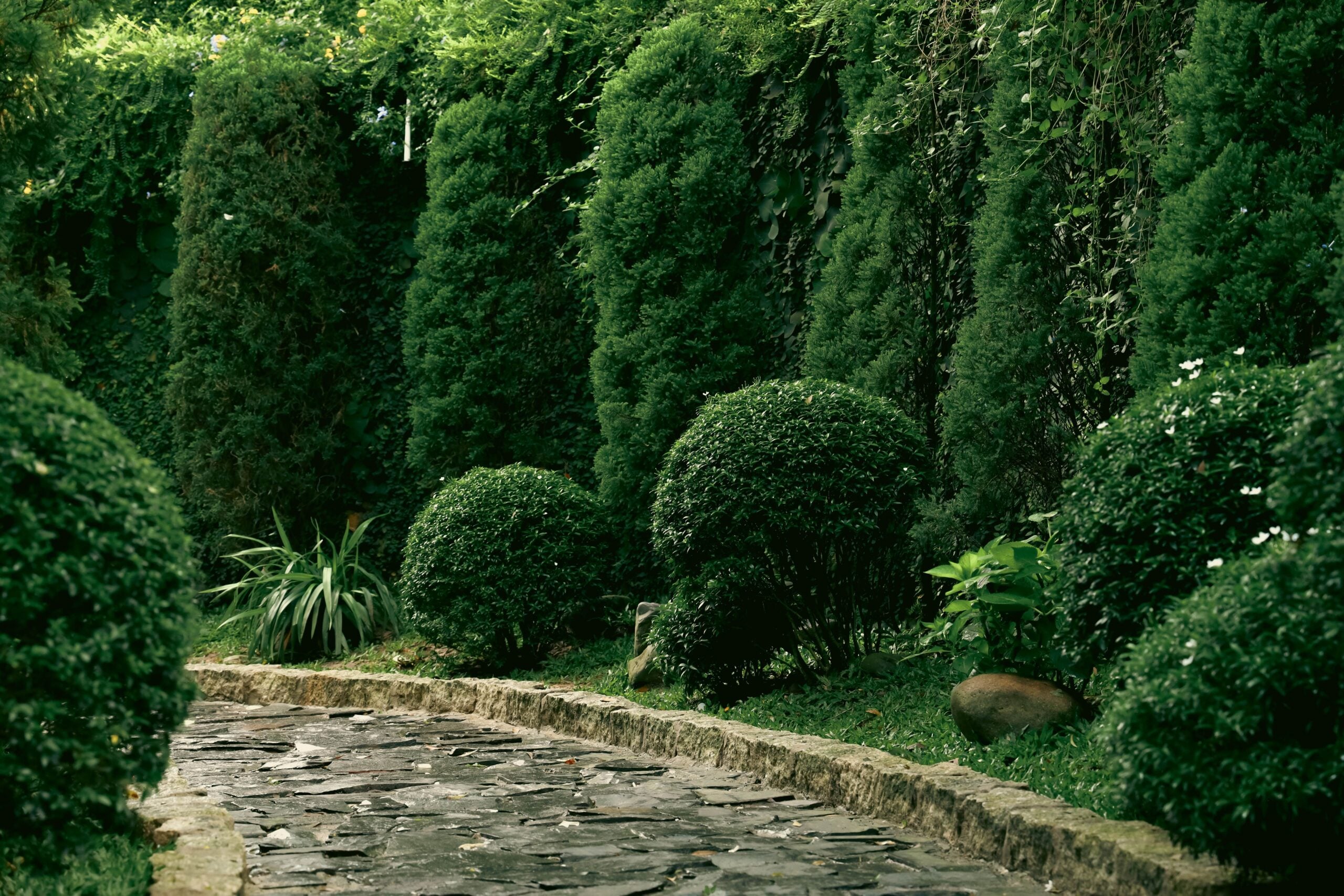
Privacy screening trees and shrubs are living walls — rows of evergreens and dense plantings that block sightlines, soften noise, and mark the edges of a property without the cold, hard look of a fence. For Connecticut homeowners, they are one of the most popular landscaping investments there is, and for good reason: a well-planned green screen solves several problems at once and gets better every year instead of falling apart like wood or vinyl. Below are the top three reasons people choose privacy screening trees, and what makes each one worth the investment.
Reason 1: Year-Round Privacy and Seclusion
The most obvious reason is right there in the name. A row of privacy screening trees puts a natural barrier between your yard and the neighbors, the street, or a nearby building — turning an exposed patio, pool, or bedroom window into a private space you can actually relax in.
The key advantage over a fence is height and permanence. Most municipal codes cap fence height at six feet, but a screen of evergreens can grow fifteen, twenty, or thirty feet tall, blocking second-story windows and elevated views a fence never could. Evergreen species hold their foliage through all four seasons, so the screen works in January as well as July. Once established, it does the job quietly for decades, and unlike a fence it never needs to be repainted, re-stained, or replaced. For homeowners who want lasting seclusion, this is why privacy screening trees consistently win out over hardscape.
Reason 2: Noise Reduction and Natural Buffering
The second reason is one people appreciate more after the trees are in the ground. A dense planting of trees and shrubs absorbs and deflects sound, taking the edge off road noise, neighboring activity, and general ambient racket. It is not soundproofing, but the difference between an open yard and one buffered by a thick green screen is real and noticeable.
Privacy screening trees also buffer more than sound. They cut wind, which makes a patio more comfortable and can lower heating costs on an exposed property. They trap dust and airborne debris, catch blowing snow, and shield a yard from the headlights and activity of a busy street. A living screen is doing environmental work all year — cleaning the air, supporting pollinators and birds, and creating a calmer microclimate — that a fence simply cannot match.
Reason 3: Higher Property Value and Better Curb Appeal
The third reason is financial. Mature, healthy trees are one of the few landscape features that add measurable value to a property, and a professionally planned screen reads as an intentional, high-quality landscape rather than an afterthought. Buyers notice privacy, and a home that offers a secluded backyard tends to stand out.
There is an aesthetic payoff too. A green screen frames a property, hides unattractive views — a utility area, a parking lot, a neighbor’s shed — and gives a yard a finished, established feel. Where a fence divides, privacy screening trees enhance, adding color, texture, and seasonal interest while they work. It is the rare upgrade that improves both how a property feels to live in and what it is worth.
Choosing the Right Privacy Screening Trees for Connecticut
Getting these benefits depends entirely on planting the right species in the right place — and this is where good intentions often go wrong. Connecticut’s climate rewards hardy evergreens: Green Giant and Emerald Green arborvitae are popular for fast, dense screening, while Eastern white pine, Norway spruce, and eastern red cedar create taller, fuller barriers over time. For lower screens, dense shrubs like holly, boxwood, and viburnum fill the gap beneath the canopy.
The mistakes to avoid are spacing plants too close (which invites disease and thin, competing growth), choosing a species that outgrows the space, and planting a single species across the whole run — because if one pest or disease arrives, it can take the entire screen with it. A professional arborist consultation matches the right species to your soil, sun, and sightlines, and proper tree planting gives the screen the strong start it needs to establish quickly.
Keeping a Privacy Screen Healthy and Effective
A privacy screen is a long-term planting, and it performs only as well as it is maintained. The first two years after planting are the most important for root establishment, so consistent watering and care matter — our guide on caring for newly planted trees covers exactly what young screening trees need. As the screen matures, periodic trimming and pruning keeps it dense and shaped, a health and disease assessment catches problems before they spread down the row, and deep root fertilization keeps the plants vigorous. A little routine attention is what keeps a green screen doing its job for decades.
Plant Your Privacy Screen With Erick’s Tree Service
Privacy screening trees and shrubs deliver privacy, quiet, and lasting value — but only when the right plants go in the right places and are cared for properly from the start. That begins with a plan built around your specific property, not a guess at the garden center.
Erick’s Tree Service helps Connecticut homeowners design, plant, and maintain healthy privacy screens for residential and commercial properties. If you’re thinking about adding a green screen — or reviving one that never filled in — contact us or call (203) 367-8219 for a free consultation with no call-out fee, and we’ll help you build a screen that works for years to come.
Erick’s Tree Service — safe, reliable, professional tree planting, trimming, removal, and emergency storm cleanup for residential and commercial properties in Connecticut.