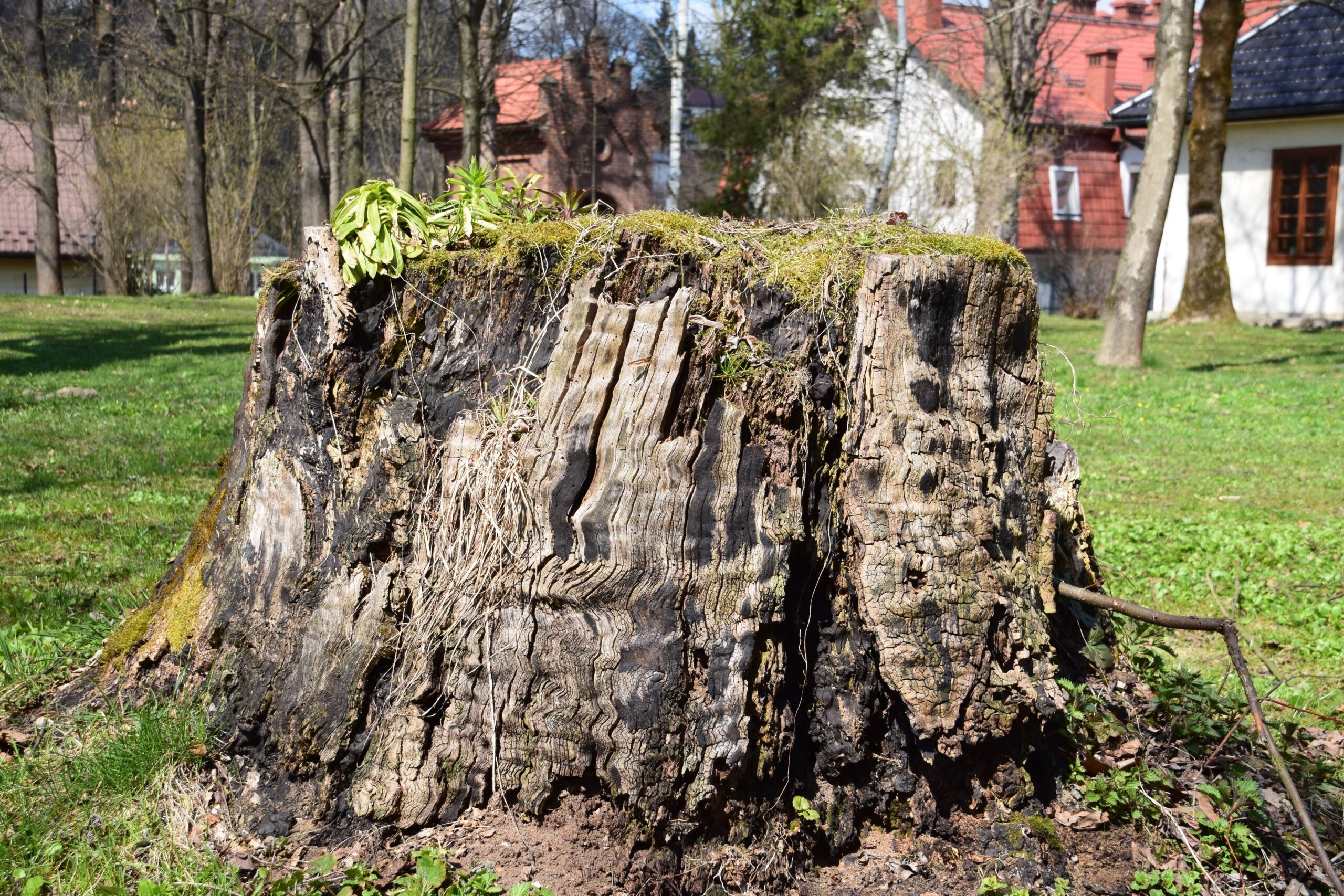
A rotting tree stump left in the ground is not just an unfinished job — it is an active problem that gets worse every season, quietly inviting pests, spreading disease, and creating hazards across your Connecticut property. Plenty of homeowners leave a stump behind after a tree comes down, figuring it will rot away on its own eventually. It will — but “eventually” can take a decade, and the whole time it sits there, it is working against your yard. Here are seven concrete reasons to deal with it now rather than later.
1. It Attracts Pests Right Next to Your Home
Decaying wood is a magnet for exactly the insects you do not want near your house. Carpenter ants, termites, wood-boring beetles, and other pests move into the soft, moist wood of a decaying stump and set up colonies. From there, it is a short trip to your deck, your fence, or your home’s foundation. A rotting tree stump essentially advertises free housing to the insects most likely to cause structural damage — removing it takes that invitation off the table.
2. It Spreads Decay and Disease to Healthy Trees
A stump does not decompose in isolation. The fungi and pathogens breaking it down live in the soil and can spread to the roots of nearby healthy trees and shrubs, and root systems that were connected to the original tree can transmit disease directly. Certain root rots and fungal infections use a decaying stump as a reservoir, quietly threatening the rest of your landscape. If you value the other trees in your yard, a tree health and disease assessment and prompt stump removal protect them from a source of infection sitting right in the ground.
3. It’s a Genuine Safety Hazard
A low, decaying stump is easy to miss and easy to trip over — especially for children playing, guests in the yard after dark, or anyone moving quickly. It is also a hazard for lawn equipment: hitting a hidden stump or its roots can damage a mower and send debris flying. As the wood of a rotting tree stump softens and crumbles, the footing around it becomes uneven and unpredictable. Clearing it removes a real liability from the most-used part of your property.
4. It Keeps Trying to Grow Back
Many species do not give up just because the trunk is gone. A stump can send up persistent suckers and shoots — sometimes for years — forcing you to cut them back again and again. Those shoots draw on the old root system and can pop up several feet away from the stump itself. Grinding out the stump ends the cycle for good instead of leaving you fighting the same regrowth every season.
5. It Drags Down Your Curb Appeal and Property Value
A rotting tree stump reads as neglect. It interrupts an otherwise clean lawn, signals an unfinished job to anyone who sees it, and can quietly lower a property’s perceived value — a real concern if you plan to sell. Where healthy landscaping adds value, a decaying stump subtracts it. Removing it restores a finished, cared-for look to the yard and lets you reclaim that spot for grass, a garden bed, or a new planting.
6. It Wastes Usable Yard Space
Every rotting tree stump is a piece of your yard you cannot use. It blocks mowing, complicates landscaping, and takes up room where you might want a patio, a play area, a flower bed, or a new tree. The roots below make planting nearby difficult, too. Removing the stump — and grinding out the root flare — opens the space back up and makes the whole area easier to maintain.
7. Its Roots Cause Ongoing Problems Underground
The trouble does not stop at ground level. A decaying root system can continue to interfere with underground pipes, irrigation lines, and hardscape, and the moist, rotting mass attracts rodents and other burrowing animals looking for shelter. Left alone, those roots keep breaking down slowly, and the problems they cause do not resolve until the material is gone. Dealing with the stump addresses what is happening below the surface, not just the eyesore above it.
How to Remove a Rotting Tree Stump for Good
For most residential situations, professional stump grinding is the fastest and cleanest solution. A grinder reduces the stump and root flare to chips well below ground level in a single visit, so you can plant grass or landscape right over it — and the resulting wood chips can even be reused as mulch elsewhere in the yard. Trying to remove a rotting tree stump by hand, with chemicals, or by burning is slow, unreliable, and often unsafe, especially near structures, utilities, or other trees.
If the tree is still standing or only partly down, the stump is best handled as part of a complete tree removal or dead tree removal. Not sure what your situation calls for? An arborist consultation will give you a straight answer.
Get Rid of That Stump With Erick’s Tree Service
A rotting tree stump only becomes more of a liability the longer it stays — more pests, more decay, more risk, and more of your yard held hostage. Grinding it out is a quick, affordable job that solves all seven problems at once and gives you back a clean, usable space.
Erick’s Tree Service provides professional stump grinding and complete tree removal for residential and commercial properties across Connecticut. To clear a stump — or several — contact us or call (203) 514-4967 for a free inspection with no call-out fee.
Erick’s Tree Service — safe, reliable, professional tree removal, stump grinding, trimming, and emergency storm cleanup for residential and commercial properties in Connecticut.