Common tree diseases are one of the most consistent threats to Connecticut’s residential and commercial landscape trees — and one of the most frequently misidentified. Homeowners notice that something looks wrong with a tree: leaves browning at the wrong time of year, bark cracking in unusual ways, sections of the canopy dying back while the rest of the tree looks healthy. The instinct is to wonder whether the tree needs water, or more fertilizer, or simply a good pruning. Often the answer is none of those things. The tree is diseased, and the wrong response — or no response — allows the pathogen to progress to the point where treatment is no longer possible.
Connecticut’s climate is particularly conducive to tree disease. Humid summers, wet springs, and the freeze-thaw cycles of New England winters create ideal conditions for the fungal, bacterial, and nematode-driven diseases that affect the state’s most common landscape species. The Connecticut Agricultural Experiment Station, which has monitored plant disease pressure in the state for decades, consistently identifies anthracnose, fungal cankers, and the more recently arrived beech leaf disease among the primary concerns for Connecticut homeowners.
Early identification is where the outcome is determined. A disease caught at the first signs of infection can often be managed, treated, or at minimum slowed significantly. A disease identified after it has progressed through a significant portion of the tree’s canopy or root system rarely can. Here is what Connecticut homeowners need to know about the most prevalent common tree diseases in the region — what they look like, what they do, and what to do about them.
Anthracnose: The Disease Most Connecticut Homeowners Have Already Seen
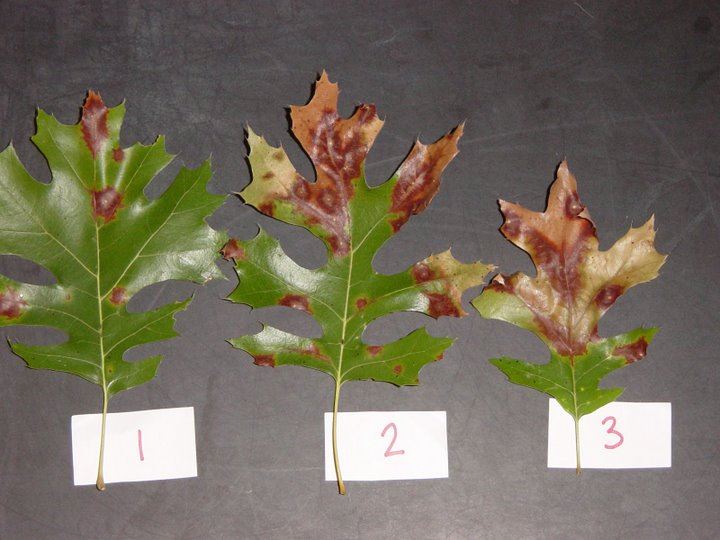
Anthracnose is arguably the most widespread of all common tree diseases in Connecticut, affecting maples, dogwoods, sycamores, oaks, and ashes. It is caused by a group of related fungal pathogens that thrive in exactly the wet, cool spring conditions Connecticut delivers reliably. During a typical spring, the Connecticut Agricultural Experiment Station records anthracnose pressure across the state as one of the most prevalent biotic problems of the season.
The symptoms vary slightly by species but follow a recognizable pattern. On maples, anthracnose produces irregular brown blotches on leaves, often following the veins, during and immediately after wet spring weather. On dogwoods, it appears as tan spots with purple borders on leaves, which can progress to blighting of entire shoots and twig dieback in severe cases — dogwood anthracnose, caused by a distinct fungal species, is particularly aggressive and has contributed significantly to the decline of dogwood populations in Connecticut’s forests. On sycamores, early-season anthracnose can cause nearly complete defoliation of the spring flush, followed by a second flush of growth as temperatures warm and conditions dry out.
Anthracnose is rarely fatal to otherwise healthy, established trees when it occurs as an isolated seasonal event. What causes serious long-term damage is repeated annual infection across multiple consecutive wet springs, which progressively weakens the tree’s canopy density and its ability to defend against secondary stressors.
Treatment involves a combination of cultural and chemical approaches. Raking and removing fallen infected leaves in autumn eliminates a primary source of overwintering spores that will reinfect the tree the following spring. Pruning out dead and blighted twigs during dormancy removes infected tissue and improves airflow. Fungicide applications timed to the early leaf emergence period — before spore germination and infection — can protect high-value trees in years when spring conditions predict high disease pressure. Maintaining overall tree vigor through deep root fertilization reduces susceptibility to the secondary infections that follow anthracnose weakening.
Oak Wilt: The Disease Connecticut Needs to Watch For
Oak wilt is not yet established in Connecticut, but it has been confirmed in neighboring New York — including in Brooklyn and multiple locations in Suffolk County. Given how oak wilt spreads, that proximity is a real concern for Connecticut homeowners with red oaks on their properties.
Oak wilt is caused by a fungal pathogen that blocks the water-conducting vessels of infected trees. In red oaks, the disease is devastating: infected trees can die within weeks to months of the first symptoms appearing. White oaks are also susceptible but tend to decline more slowly, branch by branch, over a longer period. The speed and severity of red oak infection is what makes early detection so critical — by the time a red oak shows obvious symptoms throughout its canopy, the infection is typically too advanced for the tree to be saved.
The primary symptoms to watch for are wilting and bronzing of leaves starting at the top of the canopy and moving downward, with leaves dropping while still partly green rather than going through normal fall color change. Under freshly removed bark on recently killed branches, dark streaking in the sapwood is a characteristic diagnostic feature of the disease. The fungal pathogen produces spore mats beneath the bark of freshly killed trees that attract the sap-feeding beetles responsible for carrying the disease to new hosts.
This transmission mechanism is why the timing of pruning cuts on oaks matters so much. Fresh pruning wounds on oak trees are attractive to the beetles that spread oak wilt. In Connecticut, oaks should not receive pruning cuts between April and late July, when beetle activity is highest. Any pruning of oaks during the growing season — done out of necessity after storm damage, for example — should be done with wound paint applied immediately to the freshly cut surface.
Any Connecticut homeowner with red oaks on their property who notices the wilting and leaf drop pattern described above should contact a professional for a prompt tree health and disease assessment. Given the disease’s behavior in red oaks, acting immediately on early symptoms offers the only meaningful window for limiting the damage and preventing spread to neighboring trees through root connections.
Beech Leaf Disease: Connecticut’s Most Urgent Emerging Threat
Beech leaf disease was first detected in Connecticut in 2019 in Fairfield County and has since been confirmed in New Haven County and beyond. It is caused by a nematode — a microscopic roundworm — that infects beech trees and deforms their leaves, thinning the canopy progressively across successive seasons. Younger understory beeches can die within three years of infection. Mature landscape beeches decline more slowly but ultimately face the same trajectory without treatment.
The identifying symptom of beech leaf disease is distinctive: dark bands or stripes of thickened, darker green tissue running between the leaf veins, most visible when looking up through the canopy at backlit leaves. Infected leaves are also thicker and more leathery than healthy beech foliage, and as the disease progresses, they become distorted, curled, and reduced in size. Dieback of small twigs and branches follows as the disease weakens the tree’s ability to produce sufficient foliage for its own energy needs.
The Connecticut Agricultural Experiment Station published updated management guidance in May 2025 identifying three effective treatment options: potassium phosphite applications, fluopyram-based products targeting the nematode within expanded leaves, and trunk injection with thiabendazole. Of these, potassium phosphite is suitable for large trees and has shown effectiveness even in trees surrounded by infected neighbors — an important characteristic given how widespread the disease has become in Connecticut’s beech populations. Treatment is ongoing rather than curative: because infected beech trees in a landscape are continuously re-exposed to nematodes migrating from surrounding forest trees, treatment must be maintained annually to protect the tree.
Any beech tree in Connecticut should be considered at risk and monitored closely each spring when leaves first emerge — the banding symptom is most easily seen on young leaves. Beech leaf disease is one of the common tree diseases where early professional assessment genuinely changes the outcome, because treatment before significant canopy thinning has occurred is substantially more effective than treatment begun after the tree has already declined significantly.
Dutch Elm Disease: A Warning Still Relevant Decades Later
Dutch elm disease — the fungal pathogen spread by elm bark beetles that devastated American elm populations across the country beginning in the mid-20th century — is still active in Connecticut and still killing elm trees. The disease has not resolved. It has simply become less visible as the American elm population it devastated has been reduced to scattered remnants. Elms planted as street trees or specimen trees in Connecticut landscapes remain fully susceptible.
The disease progresses through the tree’s water-conducting system, causing wilting that typically starts in one branch and spreads throughout the crown within a single growing season. The characteristic diagnostic symptom is dark streaking in the sapwood of symptomatic branches — visible when a small section of bark is peeled back from a wilting branch. Leaves on affected branches wilt and yellow but often remain attached, creating the distinctive “flagging” appearance of a branch in sudden collapse amid an otherwise green canopy.
Management in infected trees involves immediate pruning of symptomatic branches well below the visible discoloration in the wood, combined with fungicide trunk injections for valuable specimens caught early. Preventing spread to adjacent elms — either through root connections between neighboring trees or through beetle activity attracted to stressed wood — is a priority whenever the disease is confirmed on a property.
Any elm tree showing sudden wilting, particularly in a single branch or section of the canopy during the growing season, warrants immediate professional assessment. The window between first visible symptoms and irreversible systemic infection is narrow, and acting within that window is the difference between a salvageable and an unsalvageable tree.
Fungal Cankers: The Disease Hidden in Plain Sight
Canker diseases are among the most common tree diseases Connecticut arborists diagnose, affecting a broad range of species including maples, oaks, birches, and willows. Cankers are localized areas of dead bark caused by fungal or bacterial pathogens that kill the cambium — the thin layer of living tissue just beneath the bark surface — in a defined area. As the canker expands, it girdles branches or sections of the trunk, cutting off the flow of water and nutrients to the growth above.
Cankers are often visible as sunken, discolored, or cracked areas on the bark surface. In some species, resin or sap bleeding from the affected area is a characteristic sign. The branch or stem above a girdling canker wilts and dies, producing the “flagging” appearance of dead branch sections amid healthy foliage.
Canker diseases almost always enter trees through wounds or stressed tissue. Fresh pruning cuts, frost cracks, sunscald injury, insect damage, and physical wounds from lawn equipment are all common entry points. Trees that are stressed by drought, compacted soil, poor nutrition, or previous defoliation events are significantly more vulnerable to canker infection than healthy, well-maintained trees.
Management focuses on two approaches: removing infected branches with cuts well into healthy wood, and addressing the underlying stress factors that made the tree vulnerable in the first place. A tree that is properly fertilized, mulched, and maintained at appropriate soil moisture levels is significantly more resistant to canker infection than one under chronic stress. Our deep root fertilization service addresses the nutritional and soil health factors that underpin a tree’s disease resistance, and our tree trimming and pruning service removes canker-affected branches using the proper technique and tool sterilization protocols to prevent spreading pathogens between cuts.
Hemlock Woolly Adelgid: The Pest-Driven Disease Threatening Connecticut’s Hemlocks
Hemlock woolly adelgid is technically an insect pest rather than a disease pathogen, but it produces a disease-like decline in eastern hemlock trees that has eliminated hemlocks from significant portions of their natural range in Connecticut. The insects — tiny, sap-sucking creatures that overwinter as egg masses at the base of hemlock needles — feed on the tree’s stored starches, progressively weakening and eventually killing trees that go untreated.
The identifying sign is the small, white, woolly egg masses at the base of needles on the undersides of branches, visible from late fall through spring. Infested needles turn grayish-green, then yellow and drop, progressively thinning the canopy from the bottom up. Heavily infested trees can die within four to ten years without treatment.
Treatment with systemic insecticides applied as soil injections or trunk injections is highly effective when begun before the tree’s canopy has been severely thinned. Trees with less than 50% canopy loss at the time treatment begins have good prospects for recovery over several seasons of treatment. Trees that have lost more than 50% of their canopy are significantly harder to save and may decline despite treatment.
Any Connecticut homeowner with eastern hemlocks — particularly those in wooded or sheltered settings where adelgid populations build rapidly — should have their trees assessed if they haven’t been monitored recently. Our tree health and disease assessment includes evaluation for hemlock woolly adelgid as part of a comprehensive health check.
When to Call a Professional for Tree Disease
The common thread across all of these common tree diseases is that the outcome improves dramatically with earlier identification and professional assessment. Many of the conditions described above are visually similar to each other, to nutrient deficiencies, and to environmental stress — distinguishing between them requires experience and sometimes laboratory analysis.
The practical guidance is this: if a tree is showing symptoms that don’t match normal seasonal behavior — wilting that isn’t explained by drought, browning or dying branches that are localized rather than distributed, unusual bark discoloration, distorted or banded foliage — have it assessed by a professional before the next growing season gives the disease another opportunity to advance.
Erick’s Tree Service has provided professional tree health and disease assessment across Connecticut for 35 years. Our ISA-trained arborists identify the common tree diseases affecting Connecticut’s landscape species, distinguish disease from other stress factors, and provide a clear treatment recommendation or, where treatment is no longer viable, a safe and efficient path to tree removal.
We also offer arborist consultations for homeowners who want a comprehensive assessment of multiple trees, deep root fertilization to strengthen disease resistance in high-value specimens, and tree cabling and bracing for trees that have sustained structural damage alongside disease pressure.
Contact Erick’s Tree Service for a free estimate and a professional assessment of what your trees are dealing with — before the season gives the disease another year to advance.
Erick’s Tree Service — safe, reliable, and professional tree care for residential and commercial properties across Connecticut.