
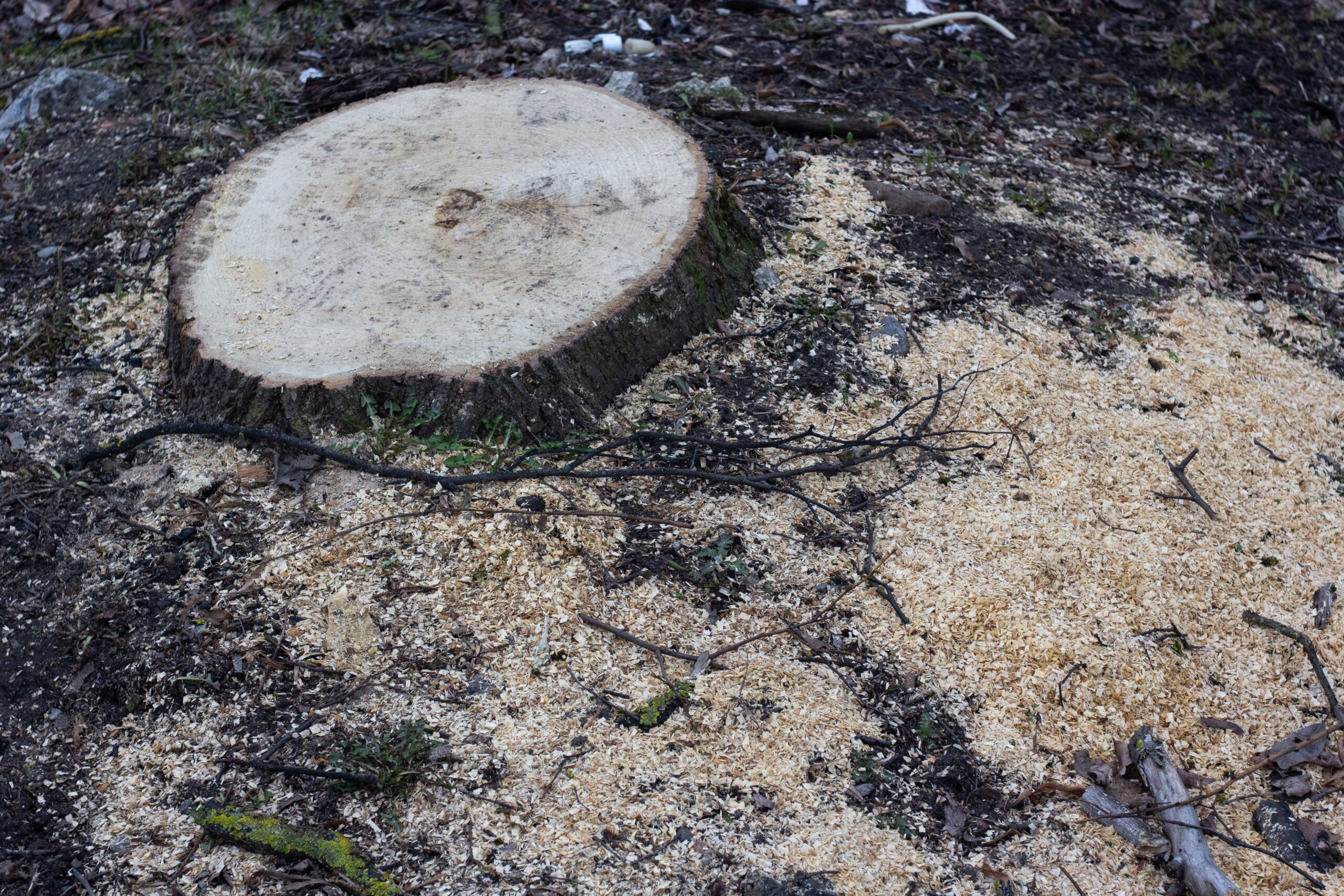
The best time to remove a tree in Connecticut is late fall through early spring — roughly November through March — when trees are dormant, the ground is firm, and crews have unobstructed sightlines through a leafless canopy. That is the general answer, and it is well-supported by arboricultural practice. But the fuller answer is more nuanced: the best time to remove a tree depends on why it needs to come down, what species it is, where it is located, and whether the situation involves an active hazard that cannot wait for an optimal seasonal window.
This guide covers the seasonal logic behind tree removal timing, the specific situations where timing matters most, the cases where it does not matter at all, and what Connecticut homeowners should know about planning removals to get the best outcome at the most reasonable cost.
Why Timing Matters for Tree Removal
Tree removal is not the same as tree pruning, where timing has direct biological consequences for the tree being worked on. A tree being removed is not going to heal from the cuts. The reasons timing matters for removal are practical and logistical rather than biological — they relate to crew access, equipment performance, job complexity, cost, and the condition of the surrounding landscape after the work is done.
That said, timing does have biological relevance for the trees and landscape around the one being removed — particularly for stumps that will be ground and areas where replanting will follow. And for specific disease situations such as oak wilt, timing is genuinely critical to preventing spread to adjacent trees.
Understanding these variables gives Connecticut homeowners the framework to plan non-emergency removals intelligently and to recognize when the best time to remove a tree is simply as soon as it can be safely scheduled.
1. Dormant Season Removal Protects the Surrounding Landscape
One of the clearest practical arguments for late fall and winter as the best time to remove a tree is the reduced impact on the surrounding landscape. During the dormant season, perennial plants are underground, lawns are not actively growing, and garden beds are not in production. Heavy equipment — cranes, chippers, stump grinders, and log trucks — can access the work site without destroying a season’s worth of plantings.
In contrast, a large removal performed in June or July means dragging sections of trunk and heavy equipment across actively growing lawn and garden areas. Even with protective measures — plywood sheets over grass, careful routing of equipment — summer removals leave a visible impact on the surrounding landscape that takes weeks or months to recover.
For Connecticut homeowners with established landscaping, mature plantings near the removal site, or irrigated lawns, scheduling removal in the dormant window protects the investment in the surrounding landscape. Our tree removal teams work through the winter months specifically because the access and impact advantages are significant.
2. Frozen Ground Improves Equipment Access for Large Removals
Heavy equipment leaves ruts. A crane, a large chipper, or a log truck operating on saturated spring soil can cause ground compaction and surface damage that takes a full growing season to recover — or longer in clay-heavy Connecticut soils. Frozen ground during winter removals provides a firm, stable surface that supports equipment without the rutting and compaction associated with wet-season work.
This is particularly relevant for crane-assisted tree removal — where a large crane must be positioned and stabilized near the tree — and for removals in backyard locations where equipment must travel across lawn or soft ground to reach the site. The same work performed in February on frozen ground versus April on thawed, rain-saturated soil produces dramatically different outcomes for the surrounding landscape.
Connecticut’s freeze-thaw cycle means the optimal ground conditions for heavy equipment access are typically available from December through February. By March, winter rains and thawing soil begin to create the wet conditions that make large equipment access more problematic.
3. Leafless Canopies Give Crews Better Sightlines and Control
Working in a leafless canopy is meaningfully safer and more precise than working in full summer foliage — another strong reason why winter is often the best time to remove a tree. Arborists can see the entire branch structure, identify defects and weak attachments, and plan rigging points with full visibility of what is above and below. In a fully leafed tree, significant portions of the crown are visually obscured — and the added weight of summer foliage changes how sections move when cut.
For complex removals — trees close to structures, trees with compromised crowns, or trees with multiple stems that require careful sequencing — the sightline advantage of dormant season work is a genuine safety improvement. Leaf-free conditions also make it easier to protect structures and adjacent plantings, because the crew can see exactly where each section will fall and rig accordingly.
4. The Best Time to Remove a Tree Affected by Oak Wilt Is Outside the Growing Season
For oak trees specifically, removal timing has direct biological consequences — not for the tree being removed, but for the oaks surrounding it. Oak wilt, caused by the fungus Bretziella fagacearum, spreads through two mechanisms: root grafts between adjacent trees, and sap beetles that carry fungal spores from infected wood to fresh wounds on healthy trees.
The sap beetle transmission route is seasonal. Beetles are most active from April through July in Connecticut, when fresh-cut oak wood produces volatile compounds that attract them. A freshly cut oak stump or log during this period can attract beetles carrying oak wilt spores, which are then deposited into the cut surface and can spread via root grafts to neighboring oaks.
Removing oak trees between November and March — when sap beetles are inactive — eliminates this transmission pathway. If an oak must be removed during the growing season, fresh cuts should be painted immediately with wound sealant and wood should be chipped or removed from the site promptly. Our tree health and disease assessment includes evaluation of oak wilt risk and removal timing recommendations for affected properties.
5. Winter Scheduling Offers Better Availability and Pricing
Tree service companies experience significant seasonal demand variation. Spring and fall — particularly after storm events — represent peak demand periods when schedules fill quickly and pricing reflects that pressure. Summer brings steady work. Winter, outside of storm response, is typically the slowest scheduling period for non-emergency removals.
For Connecticut homeowners planning removals that are not urgent, scheduling work between November and February frequently results in faster availability and, in some cases, more competitive pricing. The work is not more dangerous in winter — properly equipped crews work safely in cold conditions — but reduced demand pressure benefits homeowners who plan ahead.
This seasonal pricing dynamic applies specifically to planned, elective removals. It does not apply to emergency tree removal or hazardous tree removal, which are priced based on risk, access, and urgency regardless of season.
6. For Hazardous Trees, the Best Time to Remove a Tree Is Immediately
The seasonal logic above applies to planned, non-emergency removals. A significant subset of tree removals in Connecticut do not fit that category — they need to happen when the problem is identified, regardless of season.
A tree leaning toward a structure following a storm does not wait for November. A dead tree with visible trunk decay adjacent to a frequently used area is a liability today, not in three months. A tree that has been struck by lightning and has a compromised crown over a roof needs to come down before the next wind event, not at the start of the dormant season.
The practical standard is straightforward: if a tree poses an active hazard to people or structures, the best time to remove a tree is as soon as it can be safely assessed and scheduled. Waiting for an optimal seasonal window on a genuinely hazardous tree is deferred liability, not prudent planning. Our hazardous tree removal team handles urgent removals throughout the year, and our emergency line — (203) 650-8519 — is available around the clock for situations that cannot wait.
For trees that are declining but not yet at the point of imminent failure, a professional arborist consultation can assess the actual risk level and determine whether the removal can be safely scheduled for the dormant season or needs to be addressed sooner.
7. Stump Grinding Timing Affects Your Replanting Plans
Stump grinding is almost always performed immediately after removal, but the timing of the removal affects replanting options. Stumps ground in late fall or winter give replanting plans a full head start. The ground wood chips left by stump grinding decompose over the winter, partially reducing the nitrogen tie-up that fresh chips cause when mixed with planting soil.
If replanting is part of the plan — replacing a removed tree with a new specimen — scheduling removal and grinding during the dormant season aligns site preparation with the optimal spring planting window. The area can be cleared, amended, and ready when conditions are ideal for establishment.
Stump grinding costs $150–$400 for most residential stumps in Connecticut, depending on diameter and access. For properties with multiple stumps, grinding all of them in a single mobilization reduces per-stump cost significantly.
Seasonal Removal Guide for Connecticut Homeowners
Late Fall and Winter (November–March): The Best Time to Remove a Tree
The optimal window for planned removals. Ground conditions favor heavy equipment, the leafless canopy gives crews maximum visibility and control, the surrounding landscape is dormant and protected from equipment damage, and scheduling demand is typically lower. Best window for oak removal to minimize oak wilt transmission risk.
Spring (April–June): Acceptable With Caveats
Acceptable for most removals, but soil saturation in April and May can limit equipment access. Avoid oak removal during peak sap beetle activity (April–July) unless disease transmission risk is managed with immediate wound treatment. Schedule early in the season before summer demand increases.
Summer (July–August): Higher Impact, Higher Demand
Work is performed safely but at higher impact to the surrounding landscape. Peak scheduling demand means longer lead times and less pricing flexibility. Best reserved for urgent or hazardous situations rather than elective removals.
Fall (September–October): A Strong Second Option
As temperatures cool and trees begin entering dormancy, fall offers a solid secondary window for planned removals. Ground conditions are typically better than summer, landscape impact is moderate, and the approaching dormant season means root systems are already slowing. A practical choice for homeowners who miss the winter window.
The Questions That Determine Your Removal Timing
Before scheduling, these questions clarify whether timing is flexible or fixed:
Is the tree an active hazard? If yes, schedule immediately regardless of season. A storm preparation tree assessment before hurricane season can identify borderline cases before they become emergencies.
Is it an oak in an area with oak wilt pressure? If yes, the best time to remove a tree is the dormant season. Contact our team for a tree health assessment if you are uncertain about disease status.
Does the site have landscaping or lawns that need protecting? If yes, dormant season removal reduces impact significantly.
Will you be replanting after removal? If yes, dormant season removal aligns with optimal spring planting conditions through our professional tree planting service.
Is the removal tied to a property sale or construction project? If yes, schedule based on the project timeline and plan for equipment access protection accordingly.
Whether you are planning ahead or dealing with a situation that needs immediate attention, Erick’s Tree Service handles removals throughout the year across Connecticut. Contact us to schedule an assessment, or learn more about our dead tree removal options across Fairfield County and all of Connecticut.
Erick’s Tree Service — safe, reliable, and professional tree care for residential and commercial properties across Connecticut.