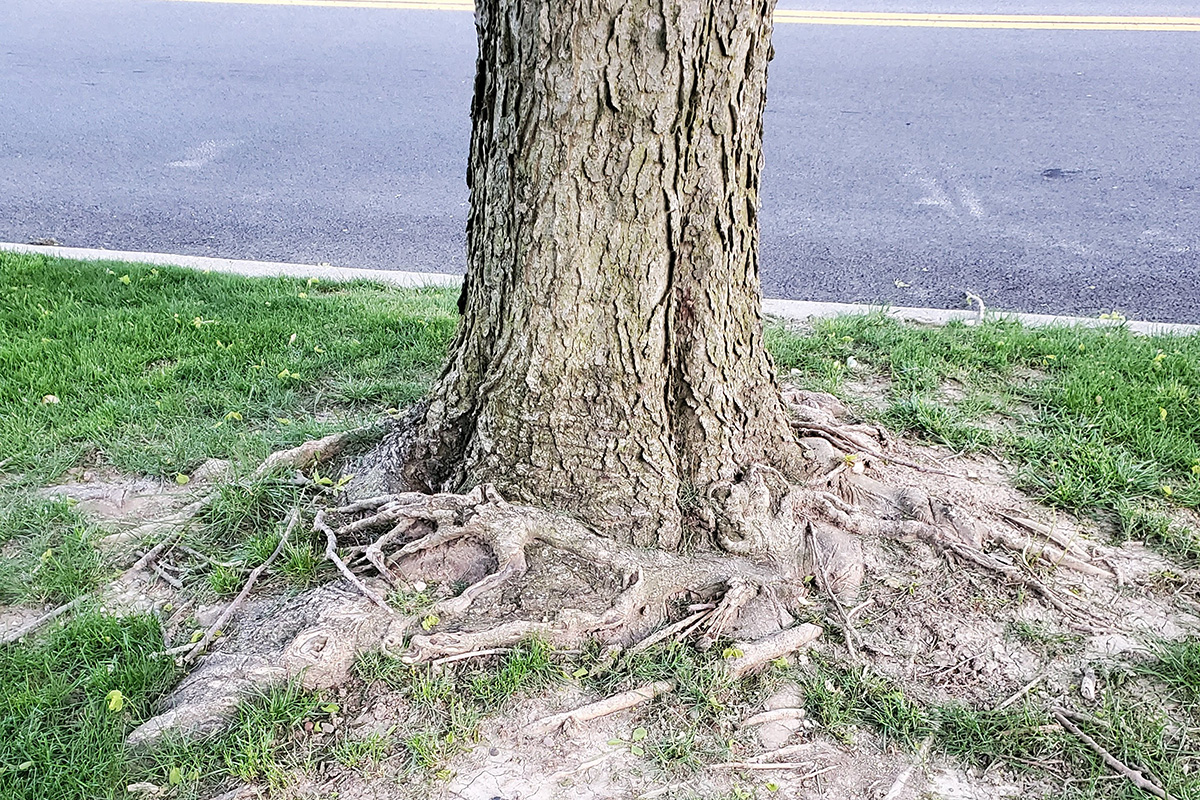
Exposed tree roots aren’t automatically a problem — many healthy trees naturally show some surface roots — but they can be a sign of trouble, and they can create real hazards, so they’re worth understanding rather than ignoring. Whether the roots snaking across your Connecticut lawn are harmless or a warning depends on why they’re exposed and what they’re doing to the tree and the area around them. Here are five things every homeowner should know before deciding what to do.
What Causes Exposed Tree Roots?
Roots surface for several reasons, and the cause matters. Sometimes it’s simply the tree’s nature — species like maples and willows are known for shallow, spreading roots that naturally show at the surface as they mature. Other times it’s a warning sign: soil erosion from rain and runoff washing away the earth over the roots, compacted soil forcing roots upward in search of air and water, or the natural thickening of roots over years as a tree grows. Occasionally, exposed tree roots point to a tree that was planted too shallow to begin with. Knowing which cause applies to your tree is the first step, because it shapes the right response.
Fact 1: They’re Not Always a Problem
Let’s start with the reassuring part. In many cases, exposed tree roots are perfectly normal and pose no threat to the tree’s health. A mature maple showing thick surface roots is often just being a maple. If the tree is otherwise healthy — full canopy, good leaf color, no signs of decline — a few visible roots are usually nothing to worry about on their own. The roots have simply grown to the point where they show, which is a normal part of many trees maturing.
Fact 2: But They Can Signal Underlying Trouble
The flip side is that exposed tree roots sometimes reveal a problem worth addressing. Significant soil erosion around the base means the tree is steadily losing the soil that anchors and feeds it. Heavily compacted soil that pushes roots upward can stress the tree over time. And roots exposed by erosion on a slope can point to drainage issues affecting your whole yard. When the exposure is getting noticeably worse over time, that trend is the signal to have the tree looked at — a tree health assessment can tell you whether the roots are a symptom of something that needs attention.
Fact 3: The Real Hazards They Create
Even when the tree itself is fine, surface roots create practical problems. They’re a genuine tripping hazard, especially near walkways, driveways, and play areas. They make mowing difficult and dangerous — hitting a root damages your mower and can send debris flying, while repeated mower strikes wound the root and open the door to decay and disease. Large surface roots can also lift and crack sidewalks, patios, and driveways over time. These are the issues that most often prompt homeowners to act, and they’re worth taking seriously even on a healthy tree.
Fact 4: Never Just Cut Them Off
Here’s the most important warning on this list. When exposed roots are inconvenient, the instinctive fix is to cut them off — and that’s a serious mistake. Roots anchor the tree and carry its water and nutrients; cutting major roots can destabilize the tree, making it far more likely to fall, and can severely stress or even kill it. Removing the wrong root, or too much root, is one of the most common ways homeowners accidentally doom an otherwise healthy tree. Root issues should always be assessed by a professional before anyone reaches for a saw, which is exactly what an arborist consultation is for.
Fact 5: The Safe Ways to Manage Exposed Tree Roots
The good news is there are safe, tree-friendly solutions. Adding a shallow layer of mulch over the roots protects them, reduces the tripping hazard, and retains moisture — just keep it thin and never piled against the trunk. Converting the area under the tree into a mulched bed or planting a shade-tolerant ground cover eliminates the mowing problem entirely and looks intentional. Where erosion is the cause, addressing the drainage and soil is the real fix. And if surface roots are severely damaging hardscape or the tree is in genuine decline, a professional can advise whether limited, careful management is possible or whether, as a last resort, tree removal and replanting with a better-suited species makes more sense. The right approach always depends on the specific tree and situation.
Get an Expert Opinion From Erick’s Tree Service
So — are exposed tree roots bad? Not always, but they’re worth a professional eye to tell the harmless from the hazardous, and to manage them without harming the tree. Guessing, or cutting roots on your own, is how a manageable situation turns into a lost tree.
Erick’s Tree Service helps Connecticut homeowners assess and safely manage root issues, along with the full range of tree care, from health assessments to removals. If exposed roots on your property have you wondering, contact us or call (203) 514-4967 for a free inspection with no call-out fee.
Erick’s Tree Service — safe, reliable, professional tree trimming, removal, stump grinding, and emergency storm cleanup for residential and commercial properties in Connecticut.