
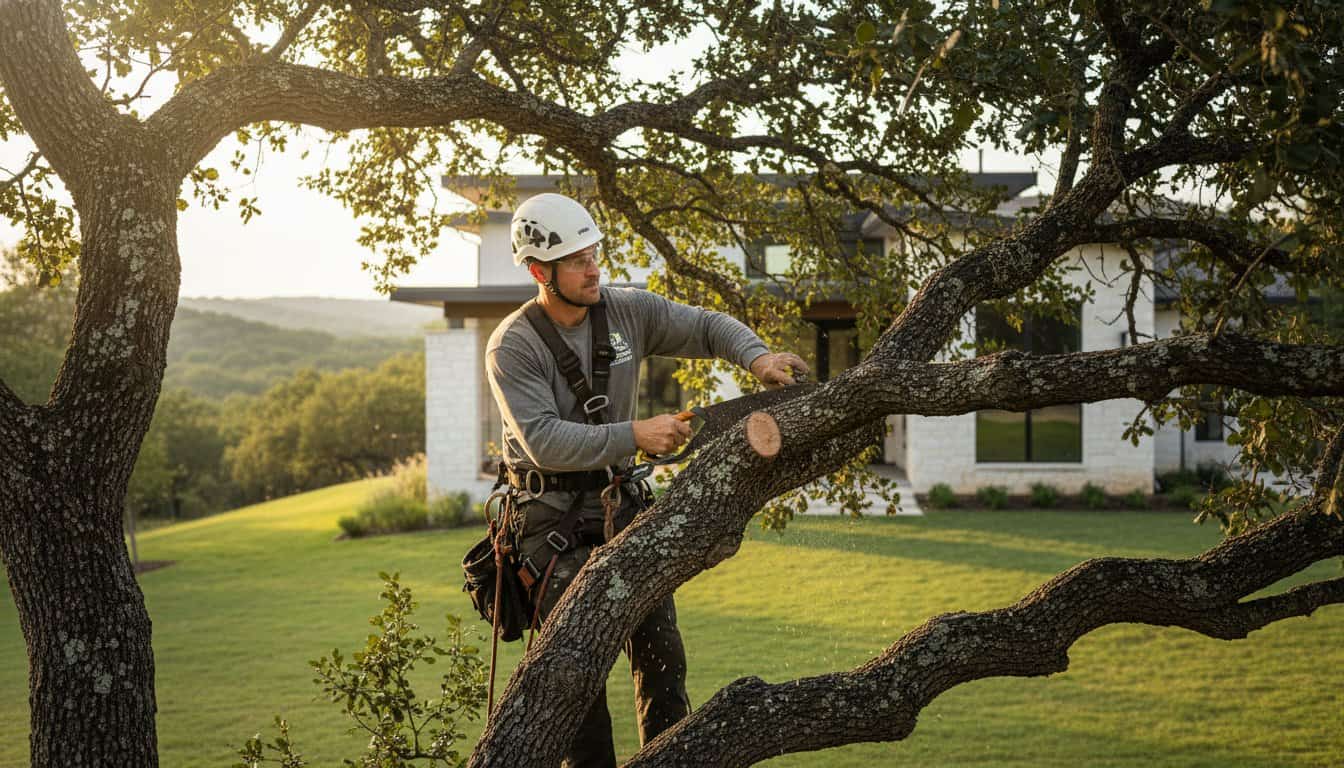
Fall tree trimming is one of the most misunderstood jobs in the yard — October is the perfect time to prune some trees and exactly the wrong time to touch others. Cut the right tree now and you protect it from disease and winter storm damage; cut the wrong one and you’ll sacrifice next spring’s flowers. As the leaves turn across Connecticut, here’s a clear guide to which trees belong on your October pruning list, which should wait, and why timing matters more than most homeowners realize.
Is October a Good Time for Fall Tree Trimming?
Yes — for the right purposes. October isn’t the season for heavy, whole-tree reshaping (that’s best saved for the deep dormancy of late winter), but it’s an excellent window for two things in particular: removing hazards before winter storms arrive, and pruning disease-prone trees while their pest threats are winding down. As trees slow toward dormancy, cuts stress them less and heal cleanly. The key to good fall tree trimming is knowing which trees benefit from an October cut and which are better left alone until spring. Below are the five worth pruning now.
1. Oak Trees — October Opens the Safe Window
Oaks are the headline reason to prune in fall. During the warm growing season, pruning wounds on oaks can attract the beetles that spread oak wilt, a serious and often fatal disease. Once temperatures cool and the trees head toward dormancy in October, those beetles become inactive, making fall and winter the safest window to prune oaks. If your oak needs attention, fall tree trimming is the right time — and a quick tree health assessment first ensures there’s no existing problem to spread.
2. Elm Trees — Prune While the Beetles Sleep
Elms follow the same logic. Pruning during the growing season risks attracting the beetles responsible for Dutch elm disease, so dormant-season cuts are far safer. October’s cooler weather makes it a smart time to prune elms and shape them before winter, avoiding the disease-spreading months entirely. As with oaks, disease-prevention timing is the whole reason these trees make the fall list.
3. Maples, Birches, and Other “Bleeders”
Some trees — maples, birches, and walnuts among them — ooze large amounts of sap if pruned in late winter or early spring. Pruning these “bleeder” trees in the fall, as they move into dormancy, avoids that heavy sap loss and the mess and stress that come with it. Fall tree trimming suits them well, keeping them tidy without the springtime weeping.
4. Dead, Damaged, and Hazardous Limbs on Any Tree
This one applies to every tree in your yard, regardless of species. Dead, cracked, diseased, or weakly attached branches should come off before Connecticut’s winter storms and ice test them. A limb that’s already compromised is the first to fail under snow load or high wind, and when it falls it can take out fences, roofs, cars, or power lines. Clearing these hazards is the single most valuable part of any fall tree trimming, and pairing it with a storm preparation assessment means nothing dangerous is left waiting overhead. Where a limb — or a whole tree — is too far gone, planned hazardous tree removal now beats an emergency call in January.
5. Evergreens — Light Shaping Only
Evergreens and conifers tolerate light fall pruning well. October is fine for tidying shape, removing dead growth, and light thinning, as long as you keep it modest — this isn’t the moment for a hard cutback. A gentle touch keeps them looking sharp through winter without stimulating tender new growth that frost would damage.
Which Trees You Should NOT Prune in October
Here’s the mistake that catches people out: pruning spring-flowering trees and shrubs in the fall removes the flower buds they’ve already set for next year. If you prune them now, you’re cutting off spring’s blooms before they ever open. Hold off on dogwood, magnolia, flowering cherry, redbud, lilac, forsythia, rhododendron, and azalea — these are best pruned right after they finish flowering in spring, not in October.
It’s also wise to avoid heavy structural pruning of most trees in early fall, since big cuts can push out tender new growth that won’t harden before the first hard frost. Save major reshaping for the dormant depths of late winter, and keep your October work focused on the five categories above. When you’re unsure which camp a tree falls into, a quick arborist consultation settles it — and our guide on how often trees should be pruned covers the wider schedule.
Get Your Fall Tree Trimming Done Right With Erick’s Tree Service
Timing and technique are everything with fall pruning — the right cut on the right tree at the right moment protects its health for years, while a poorly timed one sets it back. That judgment is exactly what a professional brings.
Erick’s Tree Service provides expert tree trimming and pruning for residential and commercial properties across Connecticut, and October is the ideal time to book. To get your trees pruned safely before winter, contact us or call (203) 514-4967 for a free inspection with no call-out fee.
Erick’s Tree Service — safe, reliable, professional tree trimming, removal, stump grinding, and emergency storm cleanup for residential and commercial properties in Connecticut.