
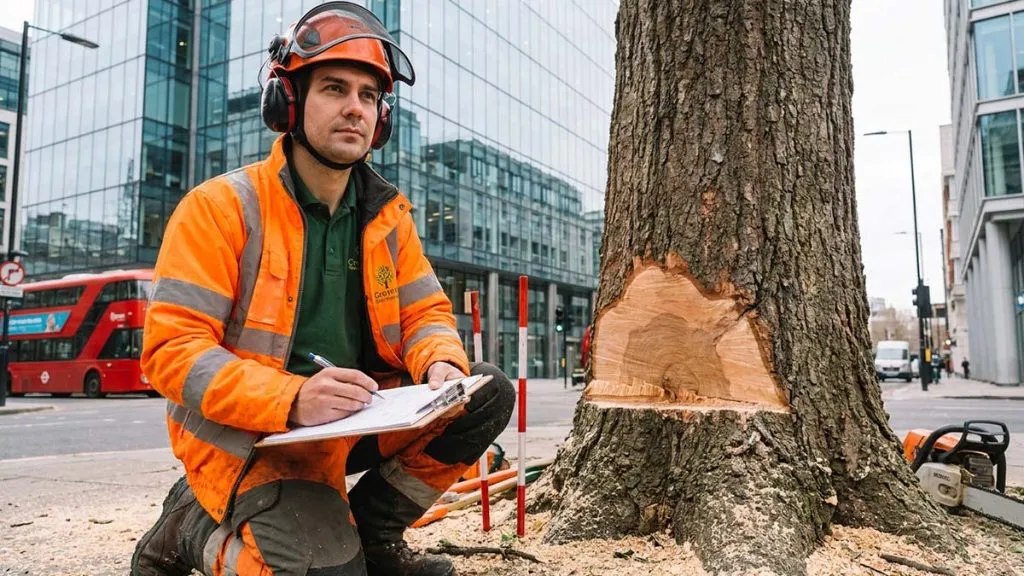
The answer depends on where the tree is, how big it is, and which town you live in — and getting it wrong can result in fines ranging from $100 to $5,000, mandatory replacement plantings, and in some cases, restoration costs that far exceed what the tree removal itself would have cost. A tree removal permit in Connecticut is not a universal requirement for every tree on private property, but it is more commonly required than most homeowners realize — and the rules governing when you need one are genuinely varied across the state’s 169 municipalities.
This guide covers what Connecticut state law says about tree removal, how local ordinances layer additional requirements on top of state law, which situations most commonly require a permit, and the practical steps to take before any tree on your property comes down.
What Connecticut State Law Covers
At the state level, Connecticut’s tree regulations primarily address two categories: public shade trees and trees near roads, wetlands, and environmentally sensitive areas. They do not establish a blanket permit requirement for removing trees on private residential property — that authority largely rests with individual municipalities.
Public shade trees — trees growing on public roads, town greens, and municipal property — are protected under Connecticut General Statutes Sections 23-59 through 23-65. These trees are under the jurisdiction of the municipal tree warden, and no tree under tree warden jurisdiction can be removed without authorization. Unauthorized removal of a public shade tree is a violation of state statute, and the penalty includes restitution for the value of the tree as determined by appraisal. If you are considering removing a tree that is anywhere near the road or appears to be in the public right-of-way, determine its jurisdiction before proceeding — a call to your town’s public works department or tree warden’s office resolves this quickly.
CGS Section 23-65 specifically governs roadside trees and shrubs, requiring a permit from the Commissioner of Transportation or local tree warden for any removal or pruning of trees within the highway right-of-way. The right-of-way often extends well beyond the paved road surface — in many Connecticut towns, the public right-of-way extends 25 feet from the center of the road, meaning trees that appear to be on a homeowner’s front yard may actually be within a regulated zone.
Inland wetlands and watercourses are governed by the Connecticut Inland Wetlands and Watercourses Act, administered locally by each town’s Inland Wetlands Commission. Tree removal within a regulated wetland or upland review area — which can extend 100 feet or more beyond the edge of the wetland — typically requires a permit from the Inland Wetlands Commission regardless of the tree’s size or species. Removing trees adjacent to wetlands without commission approval is one of the more serious regulatory violations a Connecticut homeowner can create, with penalties that include mandatory restoration of the wetland buffer.
CT DEEP administers additional regulations for tree removal in areas with endangered species habitat, critical habitats, and significant natural resource areas. Projects that require DEEP review add another layer of authorization before work can proceed.
How Local Ordinances Add Requirements
On top of state law, Connecticut’s municipalities have broad authority to enact their own tree preservation ordinances — and many of them have done exactly that. The result is a regulatory landscape that varies significantly from one town to the next, and where the rules governing what you can do with a tree in your own yard in one town may be entirely different from the rules in the town next door.
Most Connecticut municipal tree ordinances establish permit requirements based on one or more of the following criteria:
Tree size. Most Connecticut municipalities with tree preservation ordinances prohibit removing trees above a certain diameter without a permit. The threshold varies by town — some set it at 8 inches diameter at breast height (DBH), others at 10, 12, or 18 inches. Hartford, for example, requires a permit for tree removal on private property within city limits regardless of size, with no city tree removable without consent from the City Forester. Greenwich has specific regulations protecting trees on private property above size thresholds. A tree that is large enough to require a permit in Westport may not require one in a neighboring town with a higher threshold or no ordinance at all.
Heritage trees. Connecticut defines heritage trees generally as those with a trunk diameter of 24 inches or more at breast height. These trees are recognized as having special historical, ecological, or aesthetic significance, and removal typically requires more formal permitting and may require replacement planting of specified species and caliper.
Location on the property. Some ordinances distinguish between trees in the front yard versus the rear yard, or between trees within a certain distance of the street. In towns with streetscape preservation goals, front yard trees may face stricter regulation than those further from public view.
Subdivision and development activity. Tree removal associated with construction, lot clearing, or development projects is subject to additional oversight in almost all Connecticut municipalities. Disturbing trees within a specified radius of a protected specimen during construction, clearing trees beyond permitted limits on a development site, or removing trees without incorporating them into the site plan review process can result in stop-work orders and significant penalties. Most Connecticut municipalities require permits for removing trees over specified sizes regardless of the reason for removal when the removal is associated with any construction or site work.
Replacement requirements. Many ordinances that permit tree removal tie that permission to a replacement planting requirement — typically specifying the species, caliper, and number of replacement trees that must be planted within a defined period after removal.
The Tree Warden: Connecticut’s Local Authority on Trees
Every Connecticut municipality is required by state statute to have a tree warden — the designated official responsible for the care and management of public trees within the town. Tree wardens have broad authority under CGS Section 23-59, including the power to set regulations for tree care and preservation, authorize removal of diseased public trees, and order emergency removals where public safety demands it.
For homeowners, the town tree warden is also the first point of contact for questions about whether a specific tree is under municipal jurisdiction, whether a proposed removal near a road or public property requires authorization, and what the town’s current requirements are for private property tree removal. Tree warden contact information is available through each town’s public works or parks department.
Before any tree removal that is at all close to public property, a road right-of-way, a wetland, or a neighbor’s property line, a call to the tree warden’s office is the right first step. It costs nothing and can prevent a violation that would be significantly more costly to address after the fact.
When You Almost Certainly Need a Permit
While the specifics vary by municipality, these situations require some form of authorization in most Connecticut towns:
Removing any tree within the public road right-of-way or on municipal property. Removing any tree within or adjacent to a regulated inland wetland or watercourse. Removing trees above the town’s size threshold in municipalities with tree preservation ordinances. Removing trees as part of any construction, development, or land clearing project. Removing a heritage tree (24 inches DBH or larger) anywhere in Connecticut.
When You Generally Do Not Need a Permit
On unencumbered private property in Connecticut municipalities without a tree preservation ordinance, removing a private tree that is not near a road right-of-way, wetland, or neighboring property typically does not require a permit. However, “typically” is doing significant work in that sentence — and the only way to be certain for your specific property and municipality is to check with the town directly.
The absence of a permit requirement does not eliminate other considerations. Connecticut General Statutes Section 52-560 addresses liability for damage to trees. Removing a tree that encroaches on a neighbor’s property, that is subject to a utility company easement, or that is covered by a deed restriction creates potential legal exposure even if no municipal permit is required. And an emergency removal of a tree that poses an immediate safety hazard — where waiting for permit processing is genuinely not feasible — is generally permitted under Connecticut law, though documentation of the hazardous condition is advisable before proceeding.
The Neighbor Tree Question
Disputes over trees that sit on or near property lines are one of the most common tree-related legal issues in Connecticut, and they are governed by a combination of property law and CGS Section 52-560, which provides for damages when someone cuts or injures another person’s trees.
If a neighbor’s tree is causing a problem on your property — dropping limbs, damaging structures, blocking light — the legal framework in Connecticut gives you the right to trim branches that cross the property line, up to the property line, at your own expense. You do not have the right to remove the neighbor’s tree, to enter the neighbor’s property to do the trimming, or to do anything that damages the health of the tree on the neighbor’s side.
Trees whose trunks straddle the property line are jointly owned by both neighbors, and removal requires mutual consent. Trees with trunks entirely on one property belong to that property owner, even if branches and roots extend across the line.
For disputes that cannot be resolved through neighborly conversation, the Connecticut Judicial Branch’s small claims or civil division handles tree-related property disputes, and both the Connecticut Tree Protective Association and local legal aid resources can provide guidance on the applicable statute.
Practical Steps Before Any Tree Removal in Connecticut
Step 1 — Identify the tree’s location relative to the road right-of-way and property line. Use your property survey if available, or contact your town assessor’s office for parcel mapping. Trees that appear to be in your yard may be in a public right-of-way.
Step 2 — Check for wetlands. If your property has any drainage features, low areas, or defined watercourses, determine whether regulated wetlands are present and whether the tree is within the regulated upland review area. Your town’s Inland Wetlands Commission can provide a regulated area determination.
Step 3 — Contact your town’s tree warden and planning or zoning department. Ask directly whether a permit is required for your specific situation. Get the answer in writing if possible.
Step 4 — If a permit is required, file the application before work begins. Processing times vary by municipality and season. Do not proceed with removal while a permit application is pending unless the situation is a documented emergency.
Step 5 — Engage a licensed arborist for the removal. Connecticut DEEP licenses commercial arborists, and the Connecticut Tree Protective Association maintains a registry of licensed arborists and properly registered arborist businesses. Using a licensed professional ensures the work is performed to the standard required and provides documentation in the event of any subsequent dispute.
At Erick’s Tree Service, we are familiar with tree permit requirements across Connecticut’s municipalities and can advise on what is required for your specific situation before any removal is scheduled. Our tree removal service covers the full scope from permit navigation through cleanup, and our arborist consultation service provides the professional assessment and documentation that permit applications frequently require.
For hazardous trees where timing is a genuine safety concern, our hazardous tree removal service addresses the immediate safety situation with the appropriate documentation of conditions that supports emergency removal authorization under Connecticut law.
Contact Erick’s Tree Service with any questions about your specific tree situation and we will help you understand what authorization is needed before anything is cut.
Erick’s Tree Service — safe, reliable, and professional tree care for residential and commercial properties across Connecticut.