
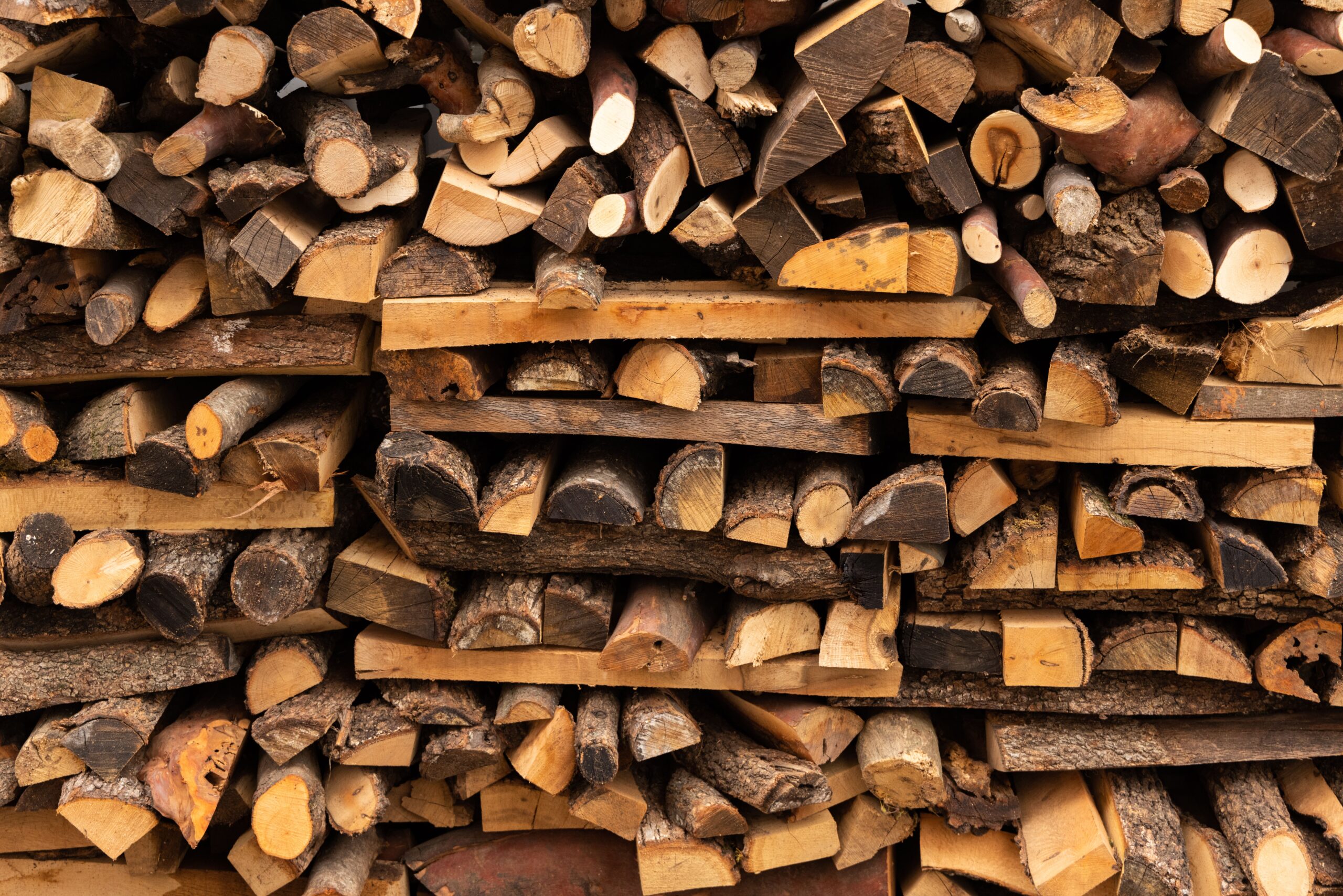
If you want to store firewood dry through Connecticut’s full annual range — humid summers, wet falls, snowy winters, and soggy springs — you need more than a tarp and a corner of the yard. Wet firewood is not just a frustrating fire starter. It burns at lower temperatures, produces significantly more smoke, deposits creosote on your chimney or flue at a much higher rate, and wastes the heat energy that properly dried wood would have delivered. The EPA recommends burning firewood with a moisture content below 20% for clean, efficient combustion — and getting there, and keeping the wood there through the year, requires doing a few specific things correctly.
The good news is that none of those things are complicated. They are a matter of location, elevation, orientation, covering, and distance — five variables you control completely with some planning before the first log goes down.
Here is exactly how to do it for Connecticut conditions specifically.
Why Firewood Gets Wet — and Why It Matters
Firewood absorbs moisture from three sources: rain and snow falling directly on the pile, moisture rising from the ground beneath the stack, and humidity absorbed from the surrounding air during Connecticut’s warm, humid summer months. Each of these works against the seasoning process in a different way, and proper storage addresses all three simultaneously.
Freshly cut wood contains up to 50% moisture by weight. Before it is ready to burn efficiently, it needs to season — a process of slow, controlled drying that reduces moisture content to 20% or below. The Connecticut Agricultural Experiment Station recommends at least six months of drying time for split hardwood in proper storage conditions. Properly stored wood that is split promptly after being cut can reach burning-ready moisture levels in six to twelve months. Improperly stored wood — piled directly on the ground, completely wrapped in plastic sheeting, stored in a location with poor airflow — can still be above 30% moisture content after two years.
The visual cues for wood that is properly seasoned: it feels noticeably lighter than it looked when fresh-cut, the end grain shows visible radial cracks from the drying process, and the bark separates easily from the wood. Wood that feels heavy, has white or pale end grain without checking, or still has bark firmly adhered to the log has not yet reached optimal burning moisture.
Location: Where You Store It Matters More Than How
The single most important storage decision is where the pile goes. The ideal firewood storage location has three characteristics: direct sunlight, good wind exposure, and adequate distance from structures.
Sunlight and wind are the two forces that actively dry firewood. A spot that receives direct afternoon sun and is not sheltered from prevailing winds will season wood faster and maintain lower moisture content through storage than a shaded, sheltered location — regardless of how well the pile is stacked. North-facing spots, spots under heavy tree cover, and spots tucked between structures are poor choices for firewood storage precisely because they block the two environmental factors that do most of the drying work.
Distance from your home matters for two reasons: pest management and fire safety. Firewood piles are attractive habitat for carpenter ants, termites, mice, and various wood-boring insects. The National Fire Protection Association recommends keeping stored firewood at least 20 to 30 feet from any structure, and most extension guidance recommends the same range. This distance discourages pests from using the woodpile as a bridge into your home’s foundation or siding, and it reduces fire risk in the event of a fire starting in or near the pile.
Many Connecticut homeowners maintain a primary stack at the recommended distance and a small secondary stack close to the house — enough for two or three days of burning. This is a practical compromise that keeps the bulk of the supply at safe distance while avoiding a half-mile walk in February for every armload of wood.
Elevation: Get Every Log Off the Ground
Ground contact is where firewood loses most of the moisture battle, particularly in Connecticut’s frequently wet conditions. Soil moisture wicks upward into wood through capillary action. Wet ground beneath a stack creates a persistently humid microenvironment at the base of the pile. Logs sitting directly on soil also create conditions for fungal growth — mold and rot that spread upward through the pile over time.
The solution is simple: elevate every row of wood above the ground surface. A purpose-built firewood rack is the most convenient option and keeps the bottom of the pile four to six inches above grade, which is sufficient clearance in most conditions. Pallets are an excellent low-cost alternative — they elevate the wood while providing a stable platform and allowing airflow beneath the stack. Two parallel pressure-treated 4x4s or landscape timbers also work, as does a layer of concrete pavers or bricks.
What does not work: logs stacked directly on mulch, grass, bare soil, or on any organic material that holds moisture. Even a single winter of ground contact will significantly increase the moisture content of the bottom rows of a stack and create the fungal conditions that spread to wood above.
Stacking: Bark Up, Gaps In, Rows Aligned
The way a firewood pile is stacked determines how well air moves through it — which determines how quickly it seasons and how well it maintains low moisture content through the year.
Bark side up is the standard recommendation for the top rows of a firewood stack. Bark is denser and less permeable than the cut face of the wood, and it sheds water the way a roof shingle does — in contrast to the cut end grain, which absorbs water more readily. Stacking with bark up on the topmost courses gives the pile a natural water-shedding surface that reduces moisture absorption from above between rain events.
Leave gaps between individual logs rather than packing the pile as tightly as possible. Air circulation through the interior of the stack is what removes the moisture the wood releases during seasoning. A tightly packed pile with no air gaps creates a stagnant moisture environment at its center. A pile with consistent gaps — even an inch or two between logs — circulates air from the sides and bottom through to the top and significantly improves drying throughout the entire stack.
Maintain row alignment rather than alternating the direction of logs between rows. Alternating directions (log tic-tac-toe style) is popular for stability on large outdoor piles, but it reduces airflow through the stack and creates moisture pockets at the intersections. Straight-run rows with consistent spacing are preferable for drying.
For large outdoor piles without a supporting structure, the classic alternative is the Holz Hausen — a circular stacking method that creates a self-supporting round pile with a conical top that sheds water naturally. These are labor-intensive to build but extremely effective at maintaining dry wood through the full year.
Covering: Roof, Not Tent
The covering approach that most homeowners get wrong is wrapping the pile completely in a tarp or plastic sheeting. A pile that is completely enclosed traps the moisture the wood is releasing during seasoning, creating humidity levels inside the covering that keep the wood wetter than the surrounding air — exactly the opposite of what storage is supposed to accomplish.
The correct approach is to cover the top only — protecting the pile from rain and snow falling from above while leaving the sides fully open to airflow and wind. Think of the cover as a roof rather than a tent.
A simple tarp secured across the top with bungee cords or rope, draping down far enough to protect the top two or three rows but not reaching the ground, accomplishes this effectively. Metal roofing panels on a simple frame are a more durable permanent solution. Purpose-built firewood covers designed specifically for this function are available and perform well. Avoid plastic sheeting draped to the ground — it holds moisture against the sides of the pile and undermines the ventilation the storage is designed to provide.
For fully covered firewood storage structures — a lean-to shed or firewood shed with a roof, open front, and sides — the same principle applies: roof protection from above, open sides for airflow. A closed-in firewood shed without adequate ventilation openings is the structural version of the same mistake as a fully wrapped tarp.
Seasoning Timeline for Connecticut Wood Species
Connecticut’s dominant firewood species each have different moisture profiles and respond to the seasoning process at different rates, which affects how long newly acquired wood needs to be stored before it reaches optimal burning moisture.
Oak is the most common firewood in Connecticut and the one that most consistently requires patience. The density that makes it such an excellent fuel is the same characteristic that slows moisture loss. Oak typically needs 12 to 24 months of proper seasoning before reaching optimal burning moisture. Oak cut and split in spring should be considered next-season wood at the earliest, and ideally stored for a full year before use.
Ash seasons faster than its density would suggest and can be ready in six months with proper storage. This is why ash has traditionally been valued as “widow maker” firewood — ready to burn when other species are not.
Maple follows a similar timeline to oak: 12 months is a reliable minimum, 18 months produces consistently optimal results. Hard maple in particular retains moisture longer than soft maple but ultimately delivers more heat per cord.
Birch seasons in six to nine months and is a reliable choice for homeowners who need wood ready sooner than oak or maple allows. Its lower density means it burns through faster than heavier species, making it better suited as a complement to denser hardwoods than as a primary fuel.
The practical implication: if you want to store firewood dry and ready for any given heating season, the wood for that season should have been split and stacked at least one full year prior — ideally two for oak and maple. Buying or cutting wood in October for the same winter is a path to burning wet wood all season.
Keeping Your Existing Supply Dry Through the Year
Once a properly seasoned supply is in storage, maintaining its condition through the year is a matter of continuing the practices that got it there: keeping it elevated, keeping the sides open, refreshing the top cover before it deteriorates, and pulling from the oldest stock at the bottom of the pile rather than the newest wood on top.
Moisture content checks are worth doing periodically if you burn significant quantities — a wood moisture meter costs under $20 at any hardware store and gives you a precise reading of what you are about to put in your stove or fireplace. Wood reading below 20% is ready to burn. Wood reading above 25% needs more time.
Firewood Available From Erick’s Tree Service
If you need a supply of properly seasoned Connecticut hardwood rather than managing the full cut-split-stack-wait cycle yourself, Erick’s Tree Service offers firewood for sale in Connecticut. Our firewood is primarily oak, maple, ash, and birch from our tree work across the state — species that produce the heat output Connecticut winters require, seasoned to burning-ready moisture content before delivery.
For homeowners who have had tree work done and have rounds or limbs on their property that they want processed into usable firewood, our wood chipping service handles the material that is too large to leave as chips and our brush and debris removal service clears the site of everything that won’t be used.
Contact Erick’s Tree Service for firewood availability and pricing, or to discuss how we can help you make the most of wood from recent tree work on your Connecticut property.
Erick’s Tree Service — safe, reliable, and professional tree care for residential and commercial properties across Connecticut.