
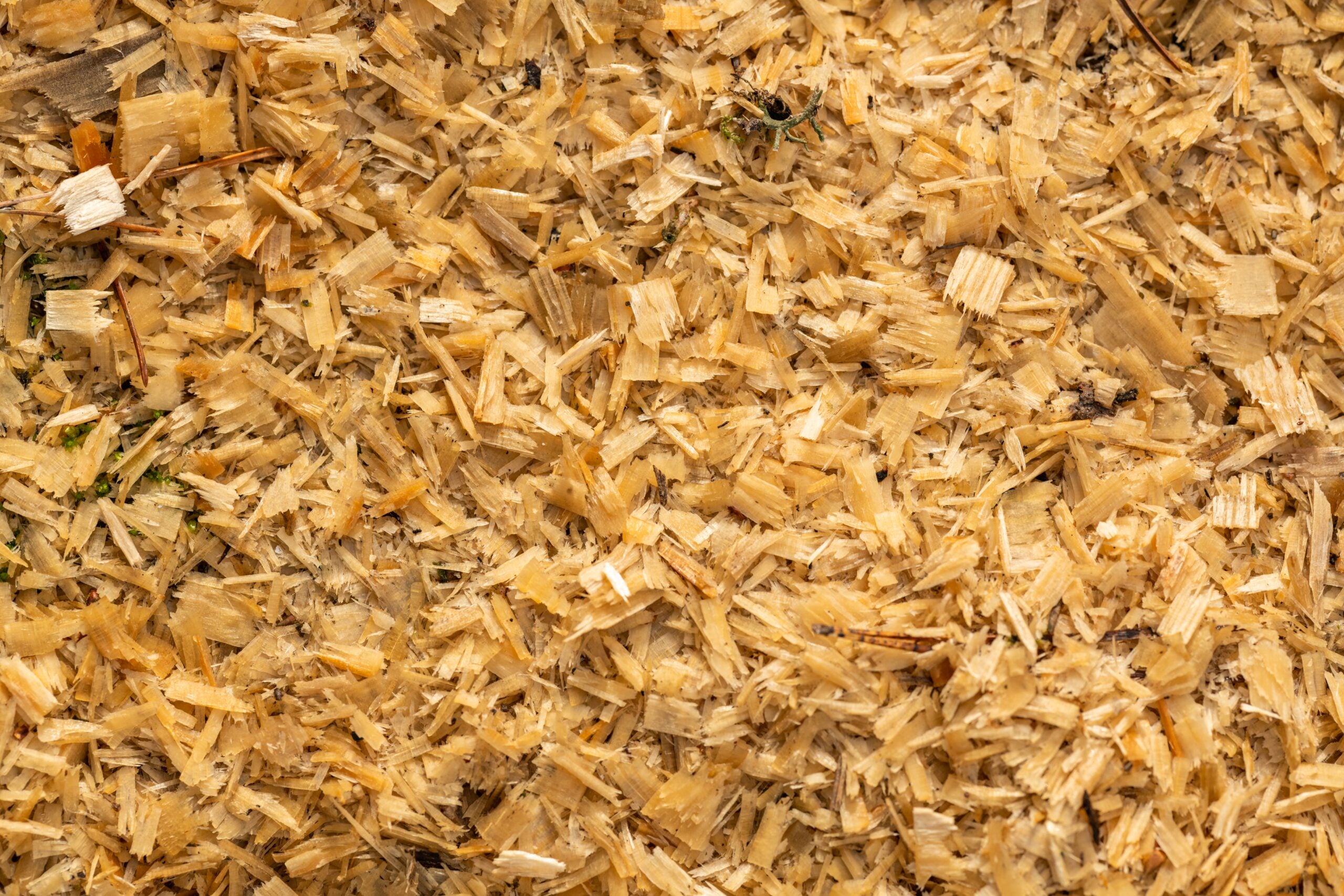
Wood chip gardening is the practice of using arborist wood chips — the material produced when tree branches, limbs, and trunks are processed through a wood chipper — as a deep mulch layer over garden beds, tree root zones, and landscape areas. The approach mimics what happens naturally on a forest floor, where fallen branches and leaves decompose slowly over time, continuously building soil organic matter, feeding a complex web of beneficial fungi and microorganisms, and maintaining moisture levels and soil temperature through seasonal extremes.
The results are meaningful and well-documented. Washington State University Extension, which has published some of the most widely cited research on arborist wood chip mulch, describes it as “one of the best mulch choices for trees and shrubs” and notes that wood chips have been “especially effective in helping establish trees and native plants in urban and disturbed environments.” The University of Connecticut’s Invasive Plant Working Group also recommends wood chips specifically for site preparation and soil improvement in Connecticut’s climate.
For homeowners in Connecticut, wood chip gardening offers a practical, low-cost, and ecologically sound way to improve the health of garden beds, reduce maintenance time, and make the most of material that would otherwise be hauled away after tree work. Here is what it involves, how it works, and how to do it correctly.
What Arborist Wood Chips Are — and What They Are Not
Before getting into how wood chip gardening works, it helps to understand exactly what arborist wood chips are, because they are frequently confused with other products that perform differently.
Arborist wood chips are the raw material produced when an arborist processes tree branches through a mechanical chipper. The output is a diverse mix of chipped wood, bark, and often some leaves and small twigs. This diversity is a feature, not a flaw. The leaf and green material in fresh arborist chips contributes nitrogen that helps balance the carbon-heavy wood content, supporting faster decomposition and creating a more nutritionally complete material.
This is fundamentally different from the dyed bark mulch sold in bags at garden centers. Bark mulch is made primarily from bark — the outer layer of tree trunks — rather than the full cross-section of branches and wood. It tends to be more uniform and aesthetically polished, but it also repels moisture more readily and provides fewer soil-building benefits than the varied mix of arborist chips. The UConn Invasive Plant Working Group makes this distinction clearly: wood chips are hydrophilic — they attract and hold moisture — while bark mulch can repel it, creating dry zones beneath the surface at deeper applications.
For wood chip gardening purposes, the arborist chip is what you want. It is also, in many cases, available at no or very low cost from tree service operations working in your area.
How Wood Chip Gardening Works
The mechanism behind wood chip gardening is a slow, continuous process of decomposition that feeds the soil from the top down — the same process that builds the deep, rich, spongy soil found on undisturbed forest floors.
When a layer of wood chips is applied to the soil surface, several things happen simultaneously. The chips shade the soil, reducing moisture evaporation and maintaining more consistent soil temperatures across the extremes of a Connecticut summer and winter. They suppress weed germination by blocking light and creating a physical barrier that most weed seeds cannot penetrate at adequate mulch depth. As the chips begin to decompose from the bottom up, they release nutrients slowly into the soil and provide habitat for the fungal networks that mature trees and perennial plants depend on for nutrient access.
The fungal dimension of wood chip gardening is one of its most significant and least discussed benefits. Healthy forest soil is dominated by mycorrhizal fungi — networks of fungal threads that connect tree and plant root systems, extending their effective reach for water and nutrients. Annual tilling and the use of synthetic fertilizers disrupt these networks. A consistent layer of wood chip mulch, left undisturbed over years, actively rebuilds them. Researchers and experienced gardeners consistently observe that areas under long-term wood chip management develop darker, more structured soil with visibly higher biological activity.
The Practical Benefits for Connecticut Gardens
The specific benefits of wood chip gardening are well-matched to the challenges Connecticut homeowners face in maintaining healthy garden beds and landscape plantings.
Weed suppression is the most immediately visible benefit. WSU Extension research shows that wood chips maintained at a depth of 4 to 6 inches control weeds without requiring chemicals or regular intervention. Connecticut’s warm, humid growing season produces aggressive weed pressure — particularly in disturbed soil around newly planted trees, shrubs, and perennials. A properly applied wood chip layer eliminates most of that pressure within a single season.
Moisture retention is particularly valuable during Connecticut’s summer dry periods. Wood chips reduce surface evaporation, keeping moisture in the root zone longer after rain and reducing irrigation needs significantly. A well-mulched garden bed can go substantially longer between waterings than bare soil during a dry August — a practical benefit for homeowners whose schedules don’t allow daily watering and whose plants suffer during the dry stretches that arrive every summer.
Soil temperature regulation works in both directions. In summer, the chips insulate the soil from peak heat, keeping root zone temperatures cooler than exposed soil reaches in direct sun. In autumn and early winter, they buffer soil temperature against the freeze-thaw cycling that heaves shallow-rooted plants and disrupts the root systems of recently established trees and shrubs. This is particularly relevant in Connecticut, where the transition from warm days to hard freezes can happen rapidly and the freeze-thaw cycle repeats dozens of times through the winter.
Soil structure improvement develops gradually over years of wood chip application. As the chips decompose, organic matter builds, improving drainage in clay-heavy soils and water retention in sandy soils. The soil becomes progressively easier to work, more biologically active, and better able to support plant health without synthetic inputs. Gardens that have been managed with consistent wood chip mulch for five or more years often show dramatically improved soil quality compared to their starting condition.
Erosion control is a benefit that matters on any sloped area of a Connecticut property. Heavy rainfall — including the intense summer thunderstorms and nor’easter events that Connecticut experiences regularly — strips topsoil from bare or lightly covered slopes. Wood chips hold the soil surface in place, slow water movement across slopes, and reduce the compaction impact of rain hitting bare soil.
How to Apply Wood Chips for Gardening in Connecticut
Getting the application right is what determines whether wood chip gardening delivers its full benefits or creates problems. The most common mistakes are applying chips too shallowly, piling chips against tree and shrub trunks, and mixing chips into the soil rather than leaving them on the surface.
Depth. Research consistently shows that a 4-to-6-inch layer is the effective minimum for weed suppression and soil moisture benefits. Shallow layers — 1 to 2 inches — actually encourage weed growth by providing a good germination environment without blocking enough light to suppress it. For garden paths and high-traffic areas, 4 inches is a practical minimum. For tree root zones and established perennial beds, 4 to 6 inches delivers the full range of benefits.
Keep chips away from trunks and stems. This is the most important application rule, and the most frequently violated. Piling wood chips against a tree trunk — what arborists call a “mulch volcano” — creates a chronically moist environment against bark tissue that evolved to be exposed to air. The result is bark decay, fungal infection, and root problems that develop slowly but cause serious long-term damage. Keep wood chips at least 4 to 6 inches away from any trunk or stem, maintaining a clear gap between the mulch layer and the woody base of the plant.
Leave the chips on the surface. Do not till or dig wood chips into the soil. The nitrogen tie-up issue that sometimes concerns gardeners — the concern that decomposing wood chips rob the soil of nitrogen — occurs primarily when chips are mixed into the soil, where microbes consuming the high-carbon chips draw nitrogen from the surrounding soil in the process. Chips left on the surface decompose from the bottom down, with the nitrogen tie-up occurring in the mulch layer itself rather than in the root zone where plants are actively growing. Established plants are not meaningfully affected by surface chip decomposition.
Fresh chips vs. aged chips. Fresh arborist chips, produced directly from recent tree work, are ideal for wood chip gardening. They contain the full mix of wood, bark, and green material that provides the best combination of mulch and soil-building benefits. Chips that have been stockpiled for months have partially decomposed and are still useful but provide less of the diverse material mix that fresh chips deliver. For tree root zones and established perennial beds, fresh chips are preferred.
How to Source Wood Chips in Connecticut
Wood chips are one of the most accessible and affordable mulch materials available to Connecticut homeowners, precisely because tree service operations produce them continuously as a byproduct of normal tree work.
When Erick’s Tree Service performs tree trimming, pruning, removal, or storm cleanup on a property, the chipped material is available for the homeowner to retain rather than being hauled away. For homeowners with tree work scheduled, requesting that the chips be left on site is the simplest and most cost-effective way to build a supply for wood chip gardening. A single tree removal can produce several cubic yards of chips — enough to mulch significant areas of a residential landscape.
Our wood chipping service processes tree material from trimming and removal projects into chips that can be retained on site or removed as part of the overall cleanup. For homeowners who want chips without an active tree work project, we can discuss availability from other jobs in the area. Our brush and debris removal service handles situations where the material needs to be cleared rather than retained, and our professional tree planting service can advise on using wood chip mulch correctly around newly established trees — one of the most impactful applications of the wood chip gardening approach for long-term tree health.
Wood Chip Gardening and Tree Health
One of the most well-supported applications of wood chip gardening is around established trees and newly planted specimens. Trees evolved to grow with their root zones covered by decomposing organic matter — not in bare, compacted, fertilized lawn extending to the trunk. Recreating that environment with a wide ring of wood chips around a tree’s root zone is one of the most effective things a homeowner can do to support long-term tree health.
A properly applied mulch ring — extending to the drip line of the canopy where possible, maintained at 3 to 4 inches depth, and kept clear of the trunk — reduces the soil compaction caused by foot traffic and lawn equipment, maintains soil moisture through dry periods, moderates soil temperature, and supports the fungal networks that the tree depends on for nutrient access. Trees that are mulched this way consistently show better growth, better disease resistance, and longer healthy lifespans than trees growing in compacted, bare-soil conditions.
For Connecticut homeowners with newly planted trees — particularly the oaks, maples, and dogwoods that are well-suited to the region’s conditions — establishing a wood chip mulch ring at planting and maintaining it through the first several years of establishment is one of the highest-value investments in long-term tree health available.
Our tree trimming and pruning, tree health assessments, and deep root fertilization services support Connecticut trees across all stages of their lives. Contact Erick’s Tree Service to discuss how wood chip gardening can be incorporated into tree care on your property, or to schedule any of our residential or commercial tree services across Connecticut.
Erick’s Tree Service — safe, reliable, and professional tree care for residential and commercial properties across Connecticut.