The best trees for Connecticut yards are ones that can handle the state’s full range of conditions — late spring frosts, humid summers, nor’easters, and winters that fluctuate between zone 5b in Litchfield County and zone 7a along the coast. Plant the wrong species and you spend years nursing a struggling tree. Plant the right one and it becomes a defining feature of your property for decades.
This list covers ten species that certified arborists consistently recommend for Connecticut residential landscapes — chosen for climate compatibility, structural durability, low disease pressure, and real landscape value. Each entry includes what the tree does well, where it fits, and what to watch for.
1. Red Maple — The Best All-Around Tree for Connecticut Yards
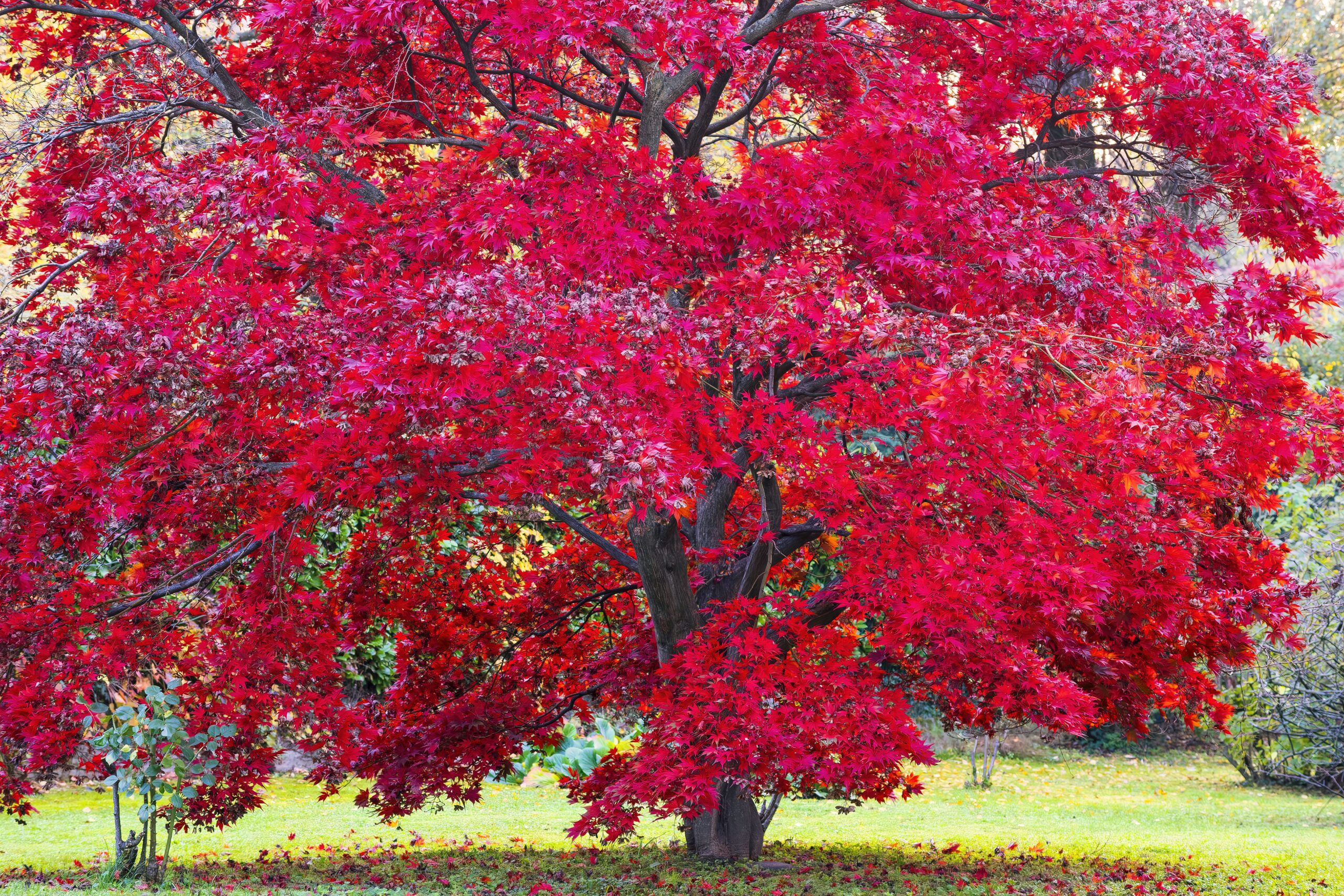
Red maple (Acer rubrum) is Connecticut’s most versatile native shade tree. It tolerates wet soils, clay, and partial shade better than almost any other large tree, and its fall color — brilliant scarlet to orange-red — is unmatched in the northeastern landscape. Mature specimens reach 40–60 feet with a rounded crown that delivers meaningful summer shade within 8–10 years of planting.
Red maple is hardy across all Connecticut zones (3–9) and largely resistant to the pests and diseases that trouble silver and Norway maples. Its one consistent weakness is co-dominant stem formation — two upright stems competing for dominance — which, if left unaddressed, creates a built-in failure point as the tree matures. Early tree trimming and pruning to establish a single dominant leader prevents this problem entirely.
Best for: Medium to large yards, wet or poorly drained sites, full sun to partial shade.
2. Eastern White Oak — Long-Term Value for Large Properties
White oak (Quercus alba) grows slowly and lives for centuries. A 100-year-old white oak is a landmark — wide-spreading, deeply furrowed, and capable of supporting more wildlife species than almost any other native tree in the eastern United States. For Connecticut homeowners with space and a long-term perspective, it is one of the most rewarding trees you can plant.
Mature white oaks reach 60–100 feet tall with a canopy spread that can exceed 80 feet. They prefer well-drained loamy or sandy soils and full sun, and they perform best away from road salt and soil compaction. Pruning should be done in late winter while the tree is dormant. A tree health and disease assessment before pruning is worth scheduling in areas where oak wilt has been identified — the disease spreads through fresh pruning wounds during the growing season.
Best for: Large properties, full sun, well-drained soils away from construction disturbance.
3. Sugar Maple — Classic Connecticut Shade and Fall Color
No tree is more associated with New England than the sugar maple (Acer saccharum). It produces the most intense fall color of any maple species — pure yellows, burnt oranges, and deep reds — and grows into a dense, symmetrical canopy that shades large portions of the yard through summer. It is also, of course, the source of maple syrup.
Sugar maple prefers deep, well-drained soils and does not tolerate road salt, compaction, or poorly drained sites. It is best planted in interior yards away from heavily salted streets. In the right conditions, it grows at a moderate pace and lives for 200 years or more. Deep root fertilization supports sugar maples in residential soils that have been stripped of the organic matter a forest floor would naturally provide.
Best for: Full sun, deep well-drained soils, away from roads with winter salt application.
4. Tulip Poplar — The Fastest-Growing Shade Tree for Connecticut Yards
Tulip poplar (Liriodendron tulipifera) is the tallest native deciduous tree in the eastern U.S. and one of the fastest-growing hardwoods available for Connecticut yards, adding 2 or more feet per year under good conditions. It grows straight and tall — 70–90 feet at maturity — with a clean columnar form that works well in yards where horizontal spread is limited. In late spring it produces large, tulip-shaped flowers that attract hummingbirds and bees, and fall color is a clean, warm yellow.
Tulip poplars prefer deep, moist, well-drained soils and full sun. They are not particularly drought-tolerant in their early years, so consistent watering during establishment is critical. Professional tree planting ensures the root flare is set at the correct grade — planting too deep is the most common reason young tulip poplars decline prematurely.
Best for: Full sun, deep moist soils, properties that need fast canopy development.
5. Eastern Redbud — The Best Small Tree for Connecticut Yards
For yards where a full-size shade tree is not practical, the eastern redbud (Cercis canadensis) delivers more visual impact per square foot than almost anything else. It is one of the first trees to bloom in spring — masses of magenta-pink flowers emerge directly from bare branches in April, before the leaves appear — and the display typically lasts two to three weeks. Heart-shaped foliage follows, turning yellow in fall. Mature height is 20–30 feet with a graceful, spreading form.
Redbuds tolerate partial shade and adapt to a range of soil conditions, which makes them one of the most flexible small trees for Connecticut properties. They work well as understory trees beneath larger oaks and maples, as focal points near patios or entrances, or as street-side plantings in sheltered locations.
Best for: Small to medium yards, partial shade, foundation plantings, ornamental focal points.
6. Serviceberry — Four Seasons of Interest in Connecticut Yards
Serviceberry (Amelanchier spp.) is a native small tree that delivers something most ornamentals cannot: genuine four-season interest. White flowers in early spring, edible blueberry-like fruit in June that draws birds and wildlife, orange-red fall color, and attractive smooth gray bark for winter. It reaches 15–25 feet depending on species and cultivar, tolerates partial shade, and is largely disease-resistant in Connecticut’s climate.
Serviceberry is one of the best trees for Connecticut yards that have challenging conditions — partial shade under an existing canopy, moist or periodically wet soil, or limited space. It is also a strong choice for homeowners who want to support native wildlife habitat. Unlike many ornamentals, it genuinely earns its place in the landscape year-round.
Best for: Partial shade, moist soils, naturalized areas, wildlife-friendly landscaping.
7. Eastern White Pine — Connecticut’s Native Evergreen for Privacy and Scale
Connecticut’s state tree, the eastern white pine (Pinus strobus), is the standard for evergreen screening in New England landscapes. It grows fast — up to 3 feet per year in good conditions — and reaches 50–80 feet at maturity with a graceful, irregular crown of soft blue-green needles. Planted in groups, white pines create effective year-round privacy screens within 5–7 years. As specimen trees, they develop into genuinely impressive landscape anchors.
White pines prefer well-drained, slightly acidic soils and full sun. They do not tolerate salt spray, heavy clay, or chronic wet feet. Selective pruning keeps their form attractive and removes any deadwood that accumulates in the interior of the canopy — our tree trimming and pruning team handles white pine maintenance throughout Fairfield County and beyond.
Best for: Full sun, well-drained acidic soils, privacy screening, large specimen planting.
8. American Hornbeam — The Best Tree for Shaded, Wet Connecticut Yards
The American hornbeam (Carpinus caroliniana) thrives where most trees refuse to grow: deep shade, wet soils, and areas under the canopy of large established trees. Its smooth, muscle-like gray bark is distinctive year-round, and fall color ranges from yellow to orange-red. It is slow-growing and compact — rarely exceeding 30 feet — which makes it ideal for constrained spaces, naturalized edges, or spots near structures where a large tree would eventually cause problems.
Hornbeam is native to Connecticut, requires almost no maintenance once established, and supports a variety of native insects and birds. For shaded corners, stream edges, or low areas where drainage is poor and other choices are limited, it is consistently the right answer.
Best for: Shade to partial shade, wet or moist soils, small spaces, naturalized areas.
9. Sweetbay Magnolia — Fragrant Flowers for Southern Connecticut Yards
The sweetbay magnolia (Magnolia virginiana) is best suited to the warmer zones of Connecticut — particularly coastal Fairfield, New Haven, and Middlesex counties — where its semi-evergreen foliage persists through mild winters. It produces large, creamy-white, lemon-scented flowers from late spring through midsummer, a bloom period significantly longer than most flowering trees, and its glossy leaves with silvery undersides catch and reflect light effectively.
Unlike many magnolia species, sweetbay tolerates wet and poorly drained soils, making it a useful option for low areas of the yard. It typically reaches 10–20 feet in Connecticut with a graceful multi-stemmed form. Schedule an arborist consultation if you are unsure whether your site and microclimate are appropriate — getting species selection right before planting saves significant time and money.
Best for: Zones 6–7a, coastal CT, moist to wet soils, fragrant ornamental interest.
10. American Sycamore — Fast Shade for Large Connecticut Properties
The American sycamore (Platanus occidentalis) is one of the largest and fastest-growing native trees in the eastern United States, and its mottled white, cream, and brown bark is one of the most visually distinctive features in any winter landscape. It grows 2–3 feet per year and reaches 70–100 feet at maturity with a canopy spread that can match its height. For large Connecticut properties that need significant shade coverage quickly, it is hard to beat.
Sycamores thrive in moist, fertile soils and are well-suited to low-lying areas and stream corridors. They are not appropriate for small yards — their size and root spread require ample space away from structures and paved surfaces. Given their rapid growth rate, early structural pruning is worth scheduling to establish good branch architecture before corrective work becomes significantly more complex and costly.
Best for: Large properties, moist or wet soils, full sun, fast canopy development.
How to Give Your New Tree the Best Start
Choosing the right species is step one. How you plant and care for the tree in the first two to three years determines whether it thrives or struggles.
Plant at the Correct Depth
The root flare — the widened base where the trunk transitions into roots — must sit at or just above grade. Planting even two or three inches too deep leads to bark decay, girdling roots, and gradual decline that may not be obvious for several years. When planting from a container, remove excess soil from the top of the root ball until the root flare is visible, then set the tree so the flare sits slightly above the surrounding grade.
Water Through Establishment
Newly planted trees need consistent deep watering for two to five years while their root systems expand. The most common reason trees fail in their first few summers in Connecticut is insufficient water during July and August. Water slowly and deeply — a long, slow soak every 7–10 days during dry stretches, more often during heat events — rather than light, frequent watering that encourages shallow roots.
Apply Mulch Correctly
A 3–4 inch layer of organic mulch over the root zone retains moisture and moderates soil temperature through summer heat. Keep it several inches away from the trunk — mulch piled against bark encourages rot and provides cover for rodents that damage the root flare.
Schedule an Inspection Before Year Three
Before a young tree reaches its third growing season, have a certified arborist assess its structure. Corrective pruning at this stage — removing a competing leader, thinning a crossing branch, addressing an early structural defect — is straightforward and inexpensive. The same corrections on a 20-year-old tree are dramatically more complex.
Whether you are starting from bare ground or replacing a tree that has come down, planting the right species in the right location is one of the most valuable long-term investments you can make in your Connecticut property. Our certified arborists can assess your site, recommend species suited to your specific conditions, and handle installation from planting to post-care. Contact Erick’s Tree Service to schedule a consultation, or learn more about our professional tree planting service.
Erick’s Tree Service — safe, reliable, and professional tree care for residential and commercial properties across Connecticut.