Tree pruning is essential for healthy growth — not just for aesthetics, but for the long-term structural integrity, disease resistance, and safety of every tree on your property. Done correctly and on the right schedule, pruning is one of the highest-return investments a Connecticut homeowner can make in their landscape.
A common misconception is that trees look after themselves. In a forest, that is largely true — natural processes of competition, branch shedding, and die-back regulate growth over decades. But a tree growing in a residential yard is in a very different environment. It is surrounded by structures, power lines, and people. It does not have the natural feedback of a forest ecosystem. And when something goes wrong — a heavy limb fails, a disease spreads, a structural weakness develops — the consequences land on the homeowner.
Regular, professional pruning changes that equation. It keeps trees structurally sound, actively growing, and far less likely to cause damage or require emergency intervention. Here is a detailed look at exactly why tree pruning is essential for healthy growth, and what happens when it is skipped.
1 Pruning Removes Deadwood Before It Becomes Dangerous
Dead branches are the most immediate reason tree pruning is essential for healthy growth — and for basic property safety. A dead branch has no living tissue holding it to the tree. The only thing keeping it in place is the collar of wood where it was once attached, and that connection weakens over time as decay sets in.
Unlike living wood, which bends under load, dead wood is brittle. It can drop without warning — in calm weather, during minor gusts, or simply from the vibration of a passing vehicle. In Connecticut, where nor’easters and summer thunderstorms are common, an unpruned tree with significant deadwood is a reliable source of storm damage claims.
Professional tree trimming and pruning removes dead and dying branches on a schedule — before they become falling hazards — and allows the tree to seal off the wound cleanly, reducing the entry points for disease and insects.
2 It Improves Air Circulation and Reduces Disease Pressure
A dense, overcrowded canopy creates the conditions that many fungal diseases and pest populations need to thrive: low light, high humidity, and poor air movement. Understanding why tree pruning is essential for healthy growth means understanding the canopy as an ecosystem that can either support or undermine the tree’s immune response.
When a certified arborist thins a canopy — selectively removing crossing branches, water sprouts, and overcrowded limbs — they increase the airflow through the entire tree. Foliage dries faster after rain, reducing the wet conditions that allow powdery mildew, anthracnose, and other fungal pathogens to establish. Light penetrates more evenly, improving photosynthesis across the whole canopy rather than just the outer shell.
This is particularly relevant for Connecticut’s hardwood species. Oaks, maples, and elms are all susceptible to various fungal and bacterial diseases that gain a foothold more easily in stressed, overcrowded trees. A proactive tree health and disease assessment combined with a regular pruning program can dramatically reduce the likelihood of serious infection.
Common Issues Prevented by Good Canopy Management
- Powdery mildew on maples and oaks
- Anthracnose in sycamores and ashes
- Fire blight in ornamental pears and crabapples
- Sooty mold following aphid or scale infestations
- Bark cankers that follow mechanical or insect injury
3 Pruning Establishes Strong, Safe Structure
This is perhaps the most lasting benefit of regular pruning, and one of the strongest arguments for why tree pruning is essential for healthy growth from the earliest stages of a tree’s life. Structure pruning — sometimes called structural or subordination pruning — guides the way a young tree develops its scaffold, ensuring it grows with a single dominant leader, well-spaced primary branches, and no built-in structural defects.
Trees that are never pruned while young often develop co-dominant stems: two or more upright limbs of roughly equal size competing to become the central trunk. The union between co-dominant stems is one of the most common failure points in residential trees. As the stems grow and press against each other, included bark forms between them — a weak, inward-growing seam that can split catastrophically under load.
Correcting a co-dominant stem in a 5-year-old tree takes one visit and a single cut. Addressing the same problem in a 30-year-old tree may require cabling and bracing to hold the stems together, or in severe cases, the removal of one entire stem — a significantly more complex and costly intervention.
The Cost of Waiting
A structural pruning visit for a young tree typically costs a fraction of what is required to manage or remove a mature tree with advanced structural defects. Early pruning is not just better for the tree — it is significantly better for your budget.
4 It Directs Energy to the Most Productive Growth
Trees are constantly making energy allocation decisions. They produce a fixed amount of photosynthate — the sugars created through photosynthesis — and distribute it across roots, trunk, branches, leaves, and any new growth they are attempting. An unpruned tree with dozens of competing, crossing, and redundant branches spreads that energy across every structure indiscriminately.
Pruning redirects that energy. By removing low-priority branches — suckers, water sprouts, rubbing limbs, and weakly attached growth — a skilled arborist channels the tree’s resources toward the branches and roots that matter most. The result is more vigorous growth where it counts, stronger wood formation in primary limbs, and a root system with more energy available for expansion and resilience.
This energy-redirection effect is a key reason why tree pruning is essential for healthy growth in trees that are recovering from stress, disease, or physical damage. When a tree is struggling, reducing the number of structures competing for resources can be the difference between recovery and continued decline.
5 Pruning Extends the Life of Your Trees
Trees that are pruned regularly and correctly outlive neglected trees in comparable conditions. The reasons are cumulative: fewer structural defects mean fewer failure points; better disease resistance means fewer fatal infections; improved photosynthesis means more energy for root growth and wound compartmentalization; and the removal of hazardous limbs prevents the kind of mechanical damage that can open large wounds in the trunk.
For mature trees — especially specimen trees with significant landscape and property value — a long-term pruning program is one of the most effective tools available. Combined with deep root fertilization to support soil health and nutrient availability, regular pruning can keep a valuable tree healthy and productive for decades longer than it would otherwise survive.
Species That Benefit Most from Regular Pruning in Connecticut
- Red and white oaks — structural pruning reduces co-dominant stem risk and improves disease resistance
- Norway and sugar maples — crown thinning reduces wind resistance and deadwood accumulation
- Ash trees — especially important for managing emerald ash borer pressure on surviving trees
- Ornamental flowering trees — annual light pruning maximizes bloom and prevents overcrowding
- Evergreens — selective pruning maintains density and prevents bare patches as lower limbs age
6 It Protects Your Home, Family, and Property Value
A well-maintained tree adds measurable value to a property — studies in landscape economics consistently show that mature trees can increase residential property values by between 7% and 19% depending on species, size, and condition. A neglected tree with dead limbs overhanging the roof, a co-dominant stem splitting over the driveway, or a failing canopy full of crossing branches is a liability, not an asset.
The safety dimension of tree pruning is essential for healthy growth in the broadest sense — not just the tree’s health, but the health of the people and structures around it. Branches that overhang rooflines collect debris, hold moisture against the shingles, and can break through during a storm. Limbs growing toward power lines create utility hazards and potential outages. Low-hanging branches over driveways and walkways are constant impact risks.
When a property has trees that have been neglected for years, the first priority is a professional arborist consultation to assess the current state, identify the most urgent hazards, and build a prioritized plan for bringing the trees back under managed conditions.
7 When and How Often Should Trees Be Pruned?
The right pruning schedule depends on the species, age, condition, and goals for the tree. As a general framework for Connecticut properties:
- Young trees (1–10 years): structural pruning every 2–3 years to establish good scaffold architecture and correct defects early
- Mature shade trees: maintenance pruning every 3–5 years to remove deadwood, manage crown density, and address any new structural concerns
- Ornamental and flowering trees: light annual or biennial pruning, timed appropriately for the species (most spring-flowering trees are best pruned immediately after bloom)
- After storm events: as needed — any time a significant limb has failed or the canopy has been structurally compromised
Timing matters as much as frequency. For most Connecticut hardwoods, late winter through early spring — before bud break — is the ideal pruning window. The tree is dormant, wounds compartmentalize quickly once growth resumes, and the absence of leaves gives the arborist a clear view of the branch structure. Some species have specific timing requirements: oaks, for example, should generally not be pruned during the growing season in areas where oak wilt is a concern.
What Proper Pruning Cuts Look Like
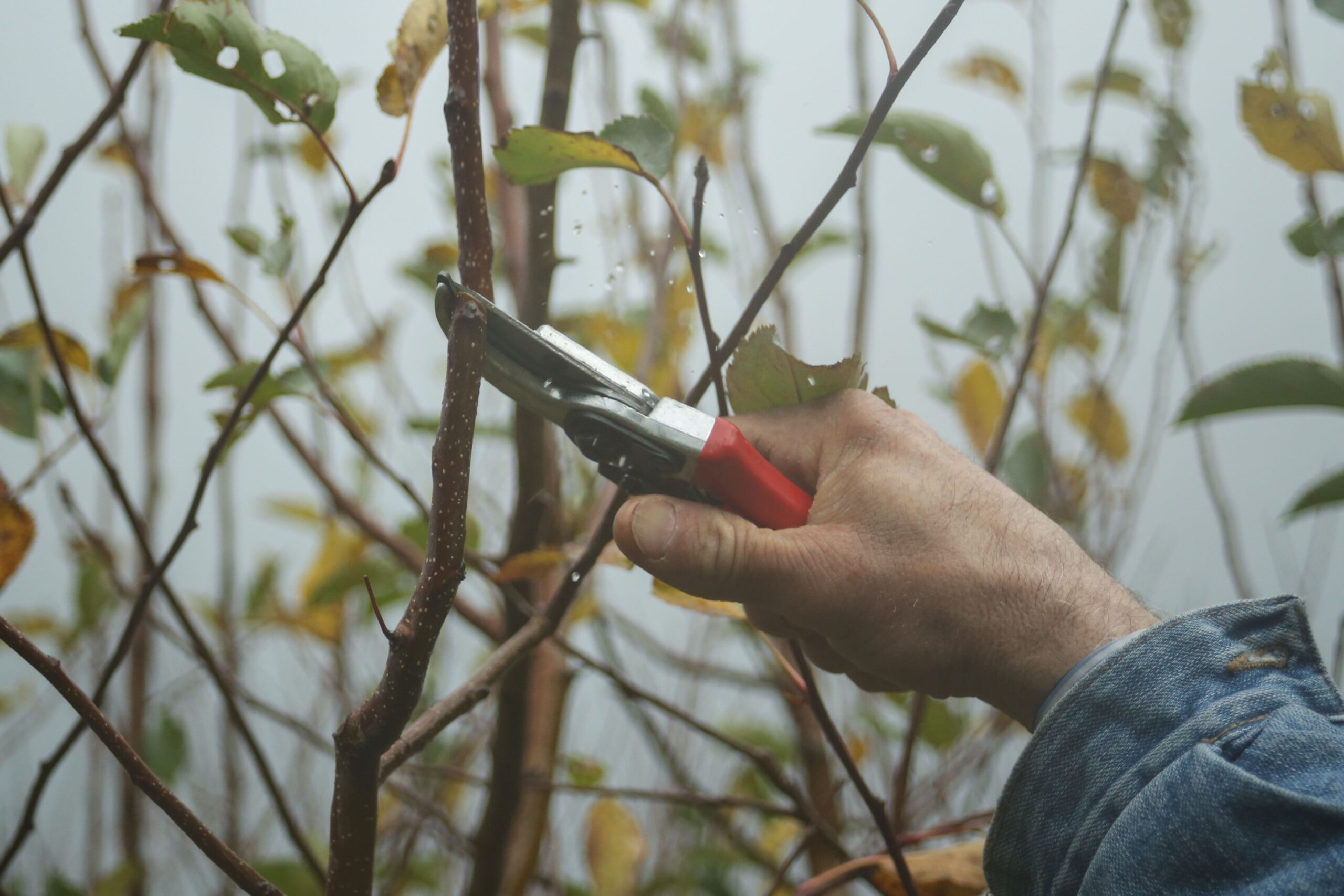
Correct pruning cuts are made just outside the branch collar — the slightly swollen ring of tissue at the base of a branch where it meets the parent stem. This collar contains specialized cells that generate the wound wood needed to seal over the pruning cut. Flush cuts that remove the collar, and stub cuts that leave excess wood beyond it, both interfere with this healing response and leave the tree vulnerable to decay and disease entry.
This is one of the clearest reasons why DIY pruning of significant limbs carries real risk, and why professional tree trimming and pruning by certified arborists produces better outcomes for the long-term health of the tree.
Ready to Schedule Your Tree Pruning?
Our certified arborists serve Bridgeport, Fairfield County, and all of Connecticut. We’ll assess your trees, build a pruning plan that fits your property, and complete the work safely — no obligation.
Get a Free Quote →
The Bottom Line: Pruning Is Tree Care, Not Tree Cosmetics
Understanding why tree pruning is essential for healthy growth changes the way you think about the trees on your property. It is not a cosmetic task performed to make the yard look neat. It is active, skilled tree management that directly determines how long a tree lives, how safely it grows, and how much value it adds to your landscape over time.
The trees that thrive for generations in residential landscapes are almost always the ones that have been consistently cared for — pruned on a schedule, assessed by professionals, and given the conditions they need to grow with strong structure and good health. The ones that fail prematurely, cause property damage, or require expensive emergency removal are overwhelmingly the ones that were left entirely to their own devices.
If your trees have not been assessed or pruned in the last three to five years, now is the right time to change that. Call Erick’s Tree Service at (203) 367-8219 or request a free consultation online. Our team will give your trees an honest evaluation and a clear path forward.