A Dead Tree Is a Falling Tree
35+ Years Experience — 1,000+ CT projects completed
24/7 Emergency Response — fast, safe storm cleanup
Free Estimates — licensed, insured & warrantied



Professional Dead Tree Removal Across Connecticut
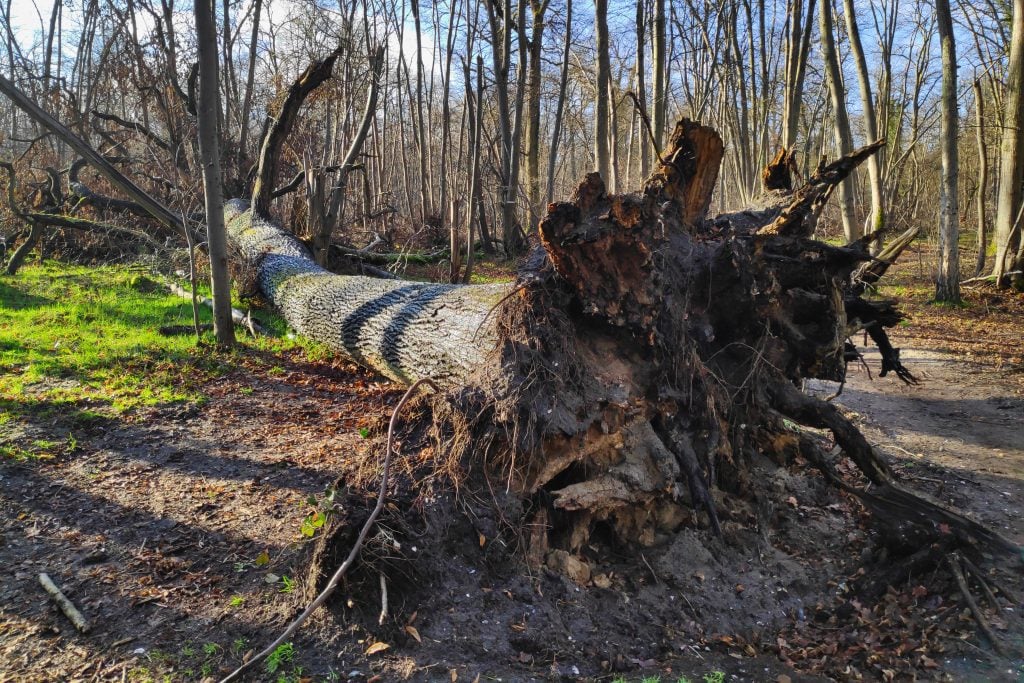
A dead tree has lost all structural integrity. Unlike a living tree, which continuously produces new wood to reinforce its structure, a dead tree begins to decay from the inside out, losing tensile strength in the trunk, breaking down branch attachment points, and becoming progressively more unpredictable under load. Dead trees shed branches without warning and can fail completely in wind events that pose no risk to healthy trees of the same size.
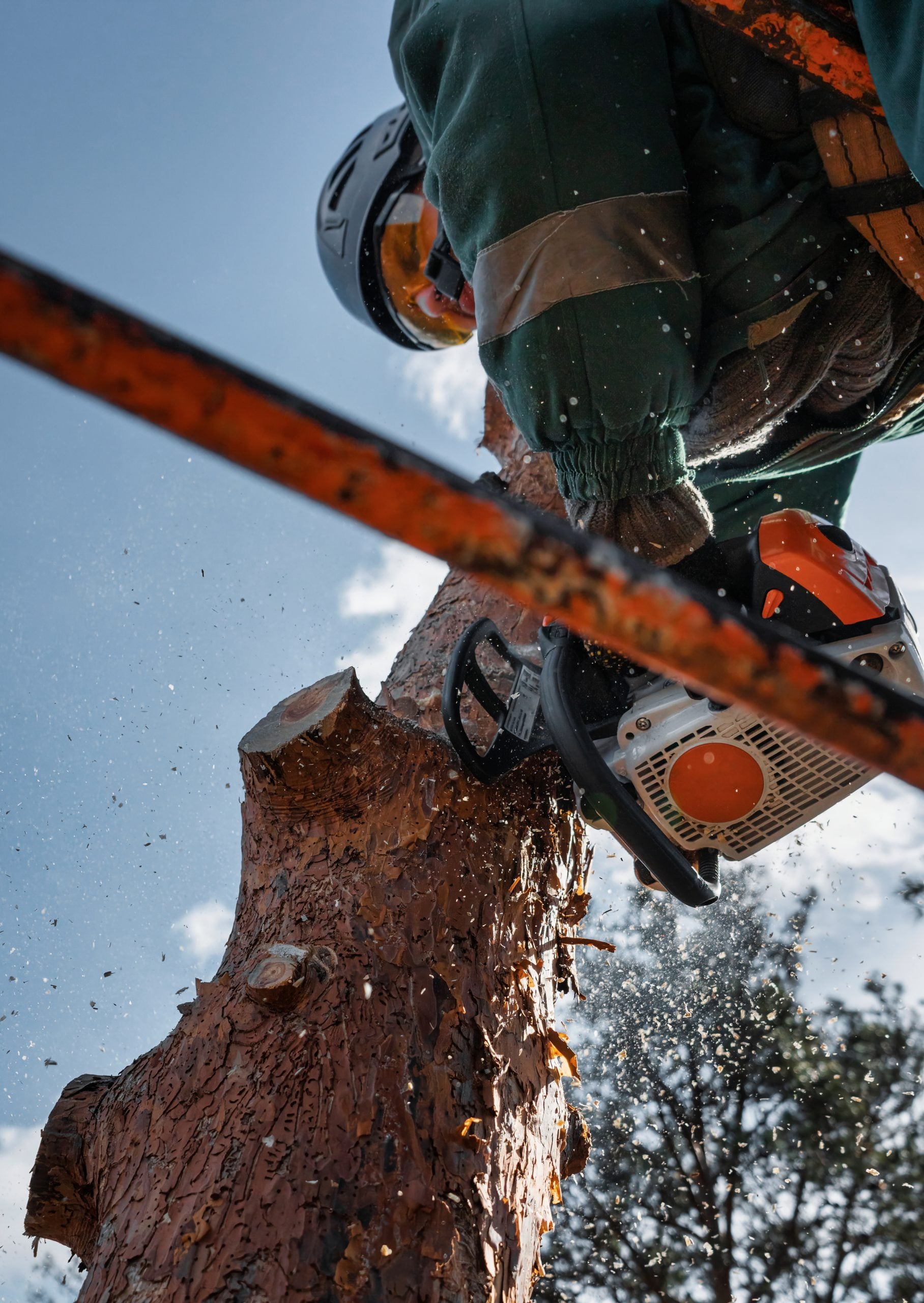
At Erick’s Tree Services, we do dead trees removal in connecticut for residential and commercial properties throughout Connecticut, from single dead specimens in residential yards to multiple dead trees on commercial properties following disease outbreaks or storm events. Dead tree removal is among the most technically demanding work in arboriculture: decayed wood behaves unpredictably under cutting forces, rigging anchors cannot be placed with the same confidence as in living wood, and the timeline from “appears intact” to “structural failure” is far shorter than most property owners realize.
Our certified arborists assess every dead tree individually before removal begins, evaluating the degree of decay, the integrity of the remaining wood, proximity to structures and utilities, and the safest removal technique for the specific condition present. A dead tree that looks solid on the outside may be hollow throughout. We account for that before anyone goes near it.
Why Choose Erick’s Tree Services for Dead Tree Removal in Connecticut?

WHAT WE CAN DO FOR YOU
When Erick’s Tree Services removes a dead tree from your Connecticut property, here is the full scope of what is included:
Pre-Removal Decay Assessment — Before any cutting begins, our arborist evaluates the tree’s decay stage: recently dead with intact wood, partially decayed with compromised zones, or advanced decay with hollow trunk sections. This assessment determines the removal technique, whether crane assistance is required, and what safety measures are applied throughout the operation.
Dead Tree Removal (Standard) — For recently dead trees with wood that still has structural integrity, we use sectional dismantling from the top down, cutting the tree into manageable sections and lowering them with ropes and rigging. The approach is identical to a standard tree removal but with heightened attention to rigging anchor quality in wood that is beginning to lose tensile strength.
Advanced Decay Removal — Trees with significant internal rot, large cavities, or wood that has become soft and punky throughout the trunk require a modified approach, shorter sections to reduce load on weakened wood, more conservative rigging anchor points, and in many cases crane assistance to eliminate load-bearing requirements on the tree’s structure entirely.
Dead Tree Over Structure Removal — A dead tree growing over or near a roofline, garage, fence, or outbuilding combines decay risk with the consequences of structural failure in the worst possible location. These removals receive our highest level of pre-job planning, including crane coordination where the decay level makes conventional rigging unsafe.
Full Debris Cleanup — All wood, bark, and debris from the dead tree is processed and removed or chipped on-site based on your preference. Dead wood chips are still usable as mulch. Large sections of recently dead hardwood (oak, maple, ash) can be left as firewood if you have use for it.
Mitigates Public Safety Risks
Eco-Friendly Solutions
Pest Control
Guide to Potential Environmental Issues
Certified Staff
Responsible Tree Trimming and Removal
Active Collaboration with Homeowners
Residential and Commercial Services
How Does Dead Tree Removal Work in Connecticut?
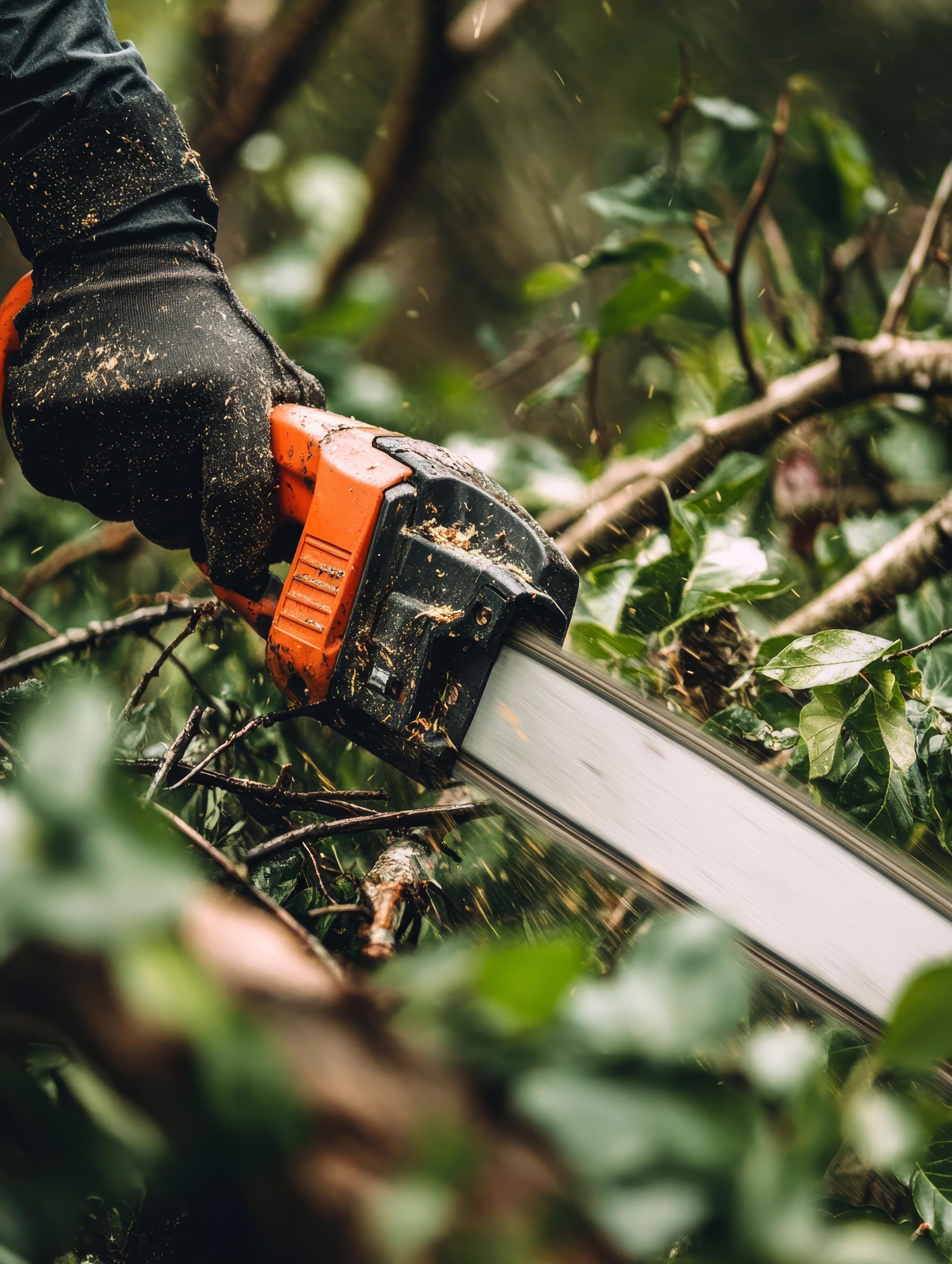
Dead tree removal follows a more conservative and deliberate process than standard tree removal. Here is how Erick’s Tree Services approaches every dead tree job:
Free On-Site Assessment — Our certified arborist visits the property and evaluates the dead tree’s decay stage, wood integrity, lean, proximity to structures and utilities, and available work space. We determine the removal method based on what the wood can and cannot safely support, not on what would be easiest.
Decay Stage Classification — We classify the tree’s decay stage: recently dead (intact wood), intermediate decay (compromised zones), or advanced decay (significant soft wood, cavities, or hollow sections). This classification directly determines the technique, crew size, and equipment required.
Site Preparation — We prepare the work zone — establishing an exclusion area around the tree, protecting adjacent structures and plantings, and positioning equipment. For advanced decay removals or trees near structures, additional ground protection and rigging redundancy is set up before anyone climbs.
Conservative Sectional Removal — Dead trees are removed in shorter sections than living trees of the same size — reducing the load on rigging anchors in compromised wood. Each anchor point is evaluated before it is loaded. For advanced decay, crane assistance is used to eliminate load requirements on the tree’s structure entirely.
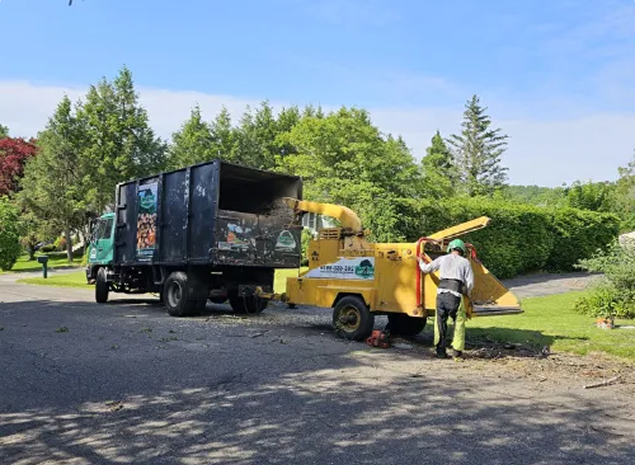
Debris Processing & Cleanup — Cut material is processed on-site and either chipped, stacked as firewood, or hauled away based on your preference. Recently dead hardwood — still solid — makes excellent firewood. Advanced decay material is chipped or removed. The site is raked and blown clean before we leave.
Stump Grinding (if included) — The stump is ground to 6 to 8 inches below grade. Dead stumps are often softer than living stumps and grind faster. The ground-out area is filled with wood chip grindings and left ready for topsoil and replanting.
What Does Dead Tree Removal Cost in Connecticut?
Dead tree removal in Connecticut typically costs $400 to $3,000+ per tree, depending on tree size, decay stage, site access, and proximity to structures. Dead trees are often comparable in cost to living tree removal of the same size, and more expensive when advanced decay requires specialized techniques or crane assistance.
Dead wood is unpredictable. Advanced decay means rigging anchors may not hold as expected, sections may break differently than anticipated, and what appears to be a clean cut may encounter a hollow section. This requires more conservative techniques, shorter sections, additional rigging redundancy, and in many cases crane assistance, all of which add real cost to the operation. Attempting to treat a significantly decayed dead tree as a standard removal is how property damage and crew injuries happen.
When Should a Dead Tree Be Removed in Connecticut?
The short answer: sooner than most homeowners think, and before it becomes an emergency. Here is how to gauge urgency based on your specific situation:
The dead tree is within fall distance of a structure, utility line, vehicle parking area, or frequently used outdoor space
The tree has already begun shedding large branches
The trunk shows visible soft spots, large cavities, or fungal conks at or below the main branch union height
The tree is a dead ash and has been dead for 3 or more years
You have confirmed the tree is dead but it is not immediately threatening any structure
You are planning a broader landscape renovation and want to coordinate the removal with other work
TREE EMERGENCY? WE’RE READY TO HELP.
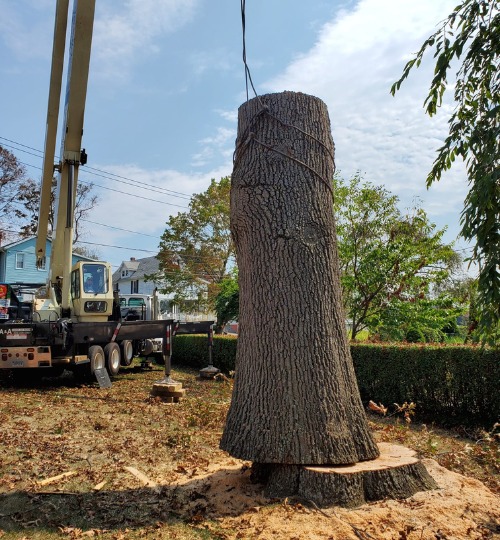
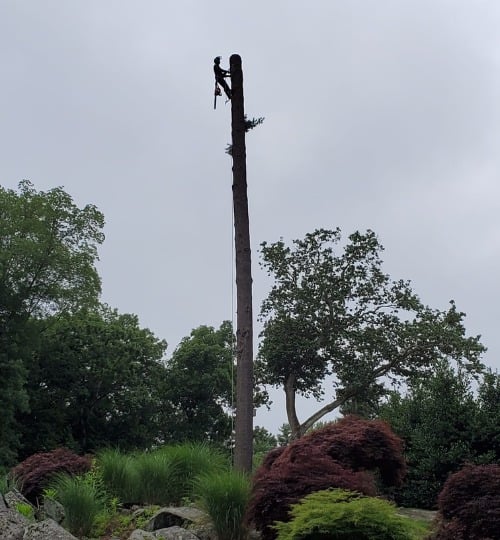
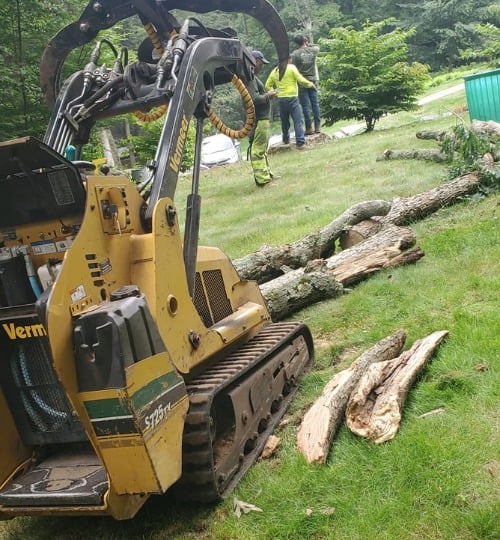
Real Projects, Real Results
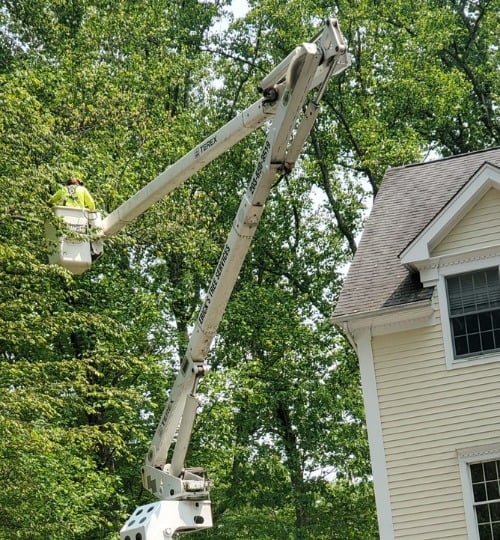
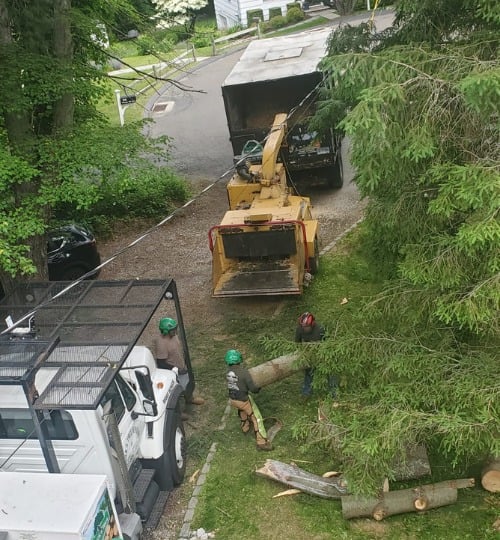
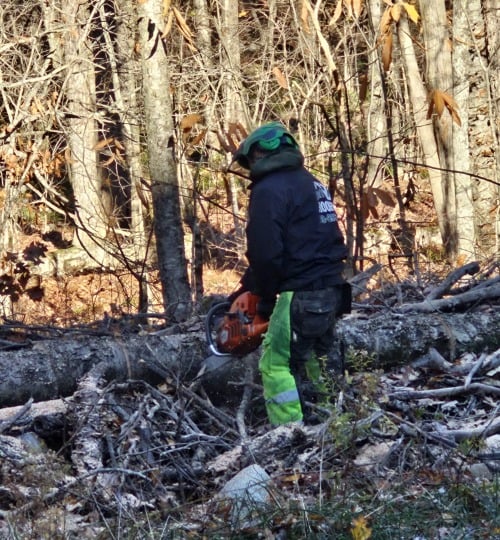
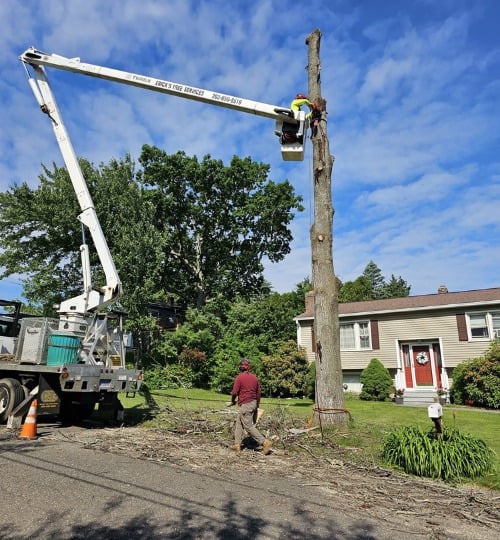
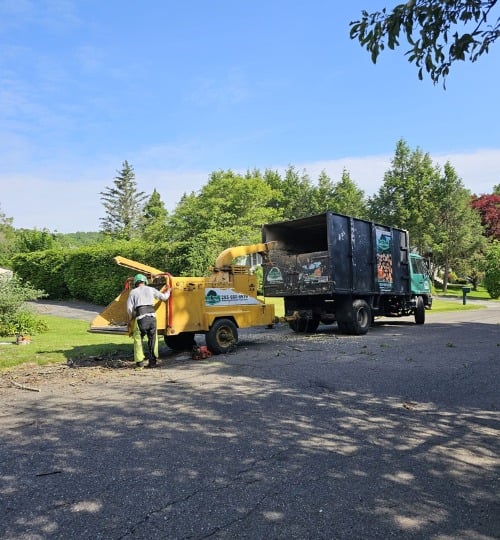
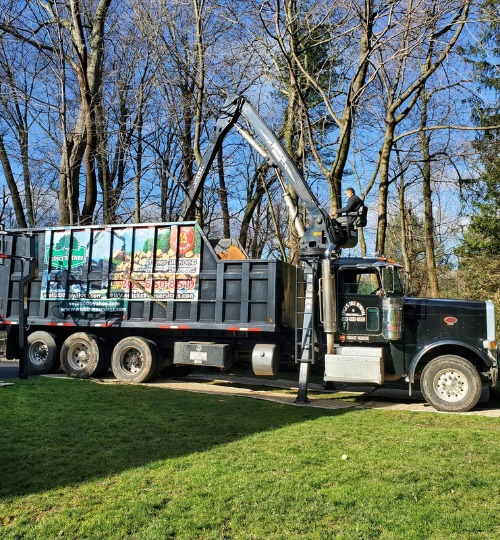
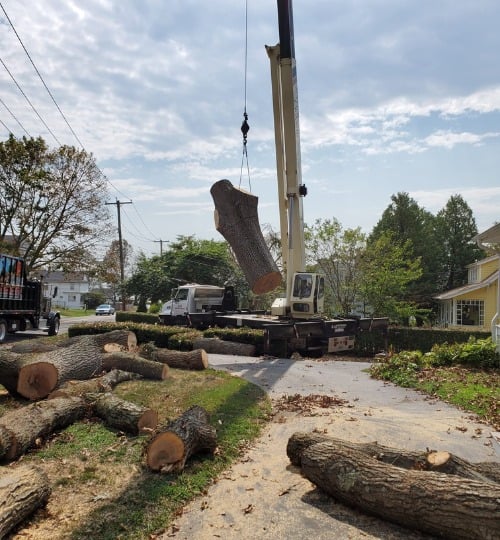
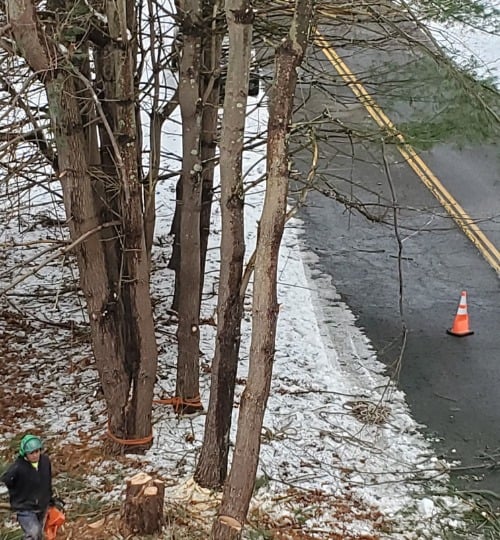
What Our Customers Are Saying


Discover Our Tree Services Coverage Across the Connecticut Area
We Serve In The Following Areas:
Norwalk
Stamford
Fairfield
Bridgeport
Westport
Surrounding Areas in Connecticut
Common Questions
Questions?
We’re here to help
Everything you need to know about our tree removal Connecticut services.
The most reliable field test is the scratch test: use a fingernail or pocket knife to scratch through the outer bark on a small branch. Green or moist tissue underneath indicates a living tree. Dry, brown, or absent tissue indicates dead wood. Apply this test in multiple locations: the top of the canopy and several major branches, since a tree in decline may have some dead sections and some living ones. When in doubt, call for an arborist assessment.
It depends on species, decay rate, and environmental conditions. In Connecticut’s humid climate, a recently dead hardwood tree may stand intact for 2 to 5 years. Softwoods and species prone to rapid decay may begin to fail within 1 to 3 years. After 5 to 7 years, most dead trees have sufficient internal decay to make structural failure likely in moderate wind events. Dead ash trees, which have become widespread in Connecticut following Emerald Ash Borer tend to deteriorate faster than most hardwoods.
Not always, but it always requires a risk assessment to determine the actual hazard level. A dead tree in a remote corner of a large lot with no structures, utilities, or regular foot traffic nearby presents a very different risk profile than the same tree 30 feet from a house. The combination of the tree’s condition and what is in its potential failure zone determines the risk level. Our arborists assess both factors and give you an honest rating.
Q: How much does dead tree removal cost in Connecticut? Dead tree removal in Connecticut typically costs between $400 and $4,500+ per tree, depending on size, decay stage, site access, and proximity to structures. Recently dead trees with intact wood cost comparably to living tree removal of the same size. Advanced decay requiring crane assistance or conservative rigging increases cost. Small dead trees generally run $400–$800. Large dead trees with advanced decay can exceed $4,000. We provide free on-site written estimates for all jobs.
Yes, in appropriate situations. Dead trees (called snags) provide valuable habitat for woodpeckers, owls, bats, and many cavity-nesting bird species. If the dead tree is in a low-target zone: away from structures, utilities, and areas of regular human activity; leaving it as a standing snag is a legitimate and ecologically valuable choice. However, this decision should be made with a professional risk assessment to confirm the target exposure is genuinely low, and the tree should be monitored annually for deterioration.
Standard homeowners insurance in Connecticut generally does not cover the cost of removing a dead tree that has not yet fallen. If a dead tree falls and damages a covered structure on your property, the structural damage may be covered, but the tree removal cost is typically not. If a dead tree falls on a neighbor’s property, liability depends on whether you knew or reasonably should have known the tree was dead and hazardous. A written arborist report documenting the tree’s condition is important documentation in either scenario.
Dead tree removal requires a level of technical assessment and conservative technique that goes beyond standard tree removal. Erick’s Tree Services brings 25+ years of experience, certified arborists trained in decay assessment and hazardous removal methodology, crane capability for advanced decay situations, and ANSI Z133-compliant operations. We offer free estimates, a 10% senior discount, 24/7 emergency response, and full licensing and insurance. We serve Bridgeport, Norwalk, Stamford, Fairfield, Westport, and surrounding Connecticut communities, and we take dead tree removal as seriously as the risk it represents.
Get A Free Tree Inspection.
No call out fee!
Need professional tree removal, pruning, stump grinding, emergency storm cleanup, or expert tree care services?
Fill out the form below and our experienced team will review your request and get back to you with a fast, no-obligation estimate tailored to your property needs.
We provide safe, reliable, and professional tree services for residential and commercial properties — always focused on safety, efficiency, and quality workmanship.
Whether you need routine maintenance, hazardous tree removal, or emergency assistance, Erick’s Tree Service is here to help protect and improve your landscape year-round.