
Oak trees are among the most valued and majestic trees in our landscapes. Unfortunately, they can fall victim to a devastating disease known as oak wilt. This aggressive fungal infection spreads quickly, often killing susceptible trees within a single growing season if left untreated.
Understanding the signs of oak wilt disease and taking preventative action early can make all the difference in protecting your trees and preserving your landscape.
What Is Oak Wilt Disease?
Oak wilt is a serious vascular disease caused by the fungus Bretziella fagacearum. The fungus attacks the water-conducting tissues of oak trees, disrupting their ability to transport water and nutrients throughout the canopy.
The disease spreads in two primary ways:
- Through interconnected root systems between nearby oak trees.
- By insects that carry fungal spores from infected trees to fresh wounds on healthy trees.
While all oak species can be affected, trees in the red and black oak groups are particularly vulnerable and often decline rapidly after infection.
Which Oak Trees Are Most Susceptible?
Oak species are generally divided into two main groups:
Red and Black Oak Group
This group includes species such as:
- Red Oak
- Black Oak
- Blackjack Oak
- Pin Oak
- Scarlet Oak
These trees are highly susceptible to oak wilt and may die within weeks or months after infection.
White and Bur Oak Group
This group includes:
- White Oak
- Bur Oak
- Swamp White Oak
These species are more resistant to the disease and typically decline much more slowly.
Oak Wilt Symptoms in Red and Black Oaks
In highly susceptible oak species, symptoms often appear during early summer and progress rapidly.
Common Symptoms Include:
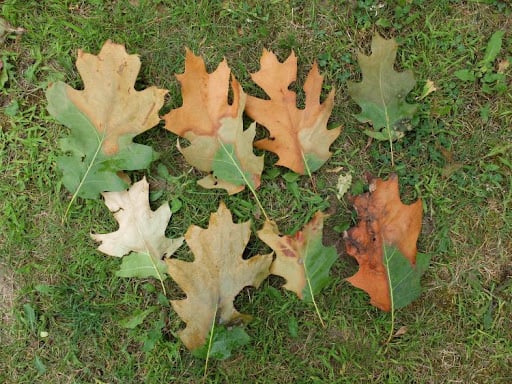
- Leaf discoloration beginning at the tips and edges
- Leaves turning dull tan, bronze, or brown
- Green tissue remaining near the leaf base
- Sharp contrast between healthy and affected tissue
- Premature leaf drop
- Rapid canopy thinning
The disease often starts in the upper canopy and quickly spreads downward. Once symptoms become visible, infected red and black oaks frequently die before the end of the growing season.
Oak Wilt Symptoms in White and Bur Oaks
White and bur oaks tend to resist infection longer and display symptoms more gradually.
Common Symptoms Include:
- Decline limited to one or several branches initially
- Gradual dieback throughout the canopy
- Mild to moderate premature leaf drop
- Slow progression over several years
- Increasing numbers of dead branches each season
Although these species can survive longer, the disease continues to spread internally and eventually causes significant structural decline.
How Oak Wilt Spreads
One of the reasons oak wilt is so dangerous is its ability to move efficiently from tree to tree.
Root Grafts
When oak trees grow close together, their roots may naturally fuse underground. These root grafts create direct pathways for the fungus to spread between neighboring trees.
Insect Transmission
Sap-feeding beetles are attracted to fresh wounds on oak trees. If they visit an infected tree and then move to a healthy tree with a fresh wound, they can transport fungal spores and initiate a new infection.
This is why proper pruning practices and wound management are essential for oak wilt prevention.
Can Oak Wilt Be Cured?
Unfortunately, there is currently no complete cure for oak wilt disease.
However, early detection and proactive management can help slow the spread of the fungus, protect nearby healthy trees, and extend the life of infected trees in some cases.
Oak Wilt Prevention and Management
1. Prevent Tree Wounds
Fresh wounds create entry points for fungal spores and disease-carrying insects.
To reduce risk:
- Avoid pruning during high-risk periods.
- Protect trees from storm damage and mechanical injuries.
- Immediately seal accidental wounds when appropriate.
2. Perform Sanitary Pruning
Removing infected branches can help slow disease progression, particularly in white and bur oak species.
Proper pruning should:
- Remove infected wood
- Improve canopy health
- Reduce stress on the tree
Always use proper pruning techniques to avoid creating unnecessary wounds.
3. Disrupt Root Grafts
Since underground root connections are a major source of transmission, professional arborists often sever root grafts between infected and healthy trees.
This process requires specialized equipment and expertise to be effective.
4. Apply Preventative Fungicide Treatments
Preventative fungicide injections can help protect healthy oak trees located near infected trees.
Benefits include:
- Reduced risk of infection
- Protection of valuable landscape trees
- Support for long-term oak health
While fungicides may slow disease progression, they cannot eliminate existing infections and should be viewed as a preventative measure rather than a cure.
Why Early Detection Matters
The sooner oak wilt is identified, the greater the chance of preventing widespread damage.
Watch for:
- Sudden leaf browning
- Early leaf drop
- Branch dieback
- Declining canopy health
- Rapid changes in mature oak trees
Prompt evaluation by a certified arborist can help confirm the diagnosis and determine the most effective management strategy.
Protect Your Oak Trees Before It’s Too Late
Oak wilt disease remains one of the most destructive threats to oak trees across many regions. Because the disease spreads quickly and often goes unnoticed until symptoms become severe, proactive monitoring and preventative care are essential.
Whether you have red oaks, black oaks, white oaks, or bur oaks on your property, regular inspections and professional tree care can help safeguard your investment and preserve the health of your landscape.
If you notice signs of oak wilt or suspect your trees may be infected, consult a qualified arborist as soon as possible. Early intervention is often the key to protecting nearby trees and minimizing long-term damage.